Chile · Rapa Nui
Easter Island
A remote Pacific island of moai, volcanic grassland, and a ceremonial village on the crater rim.
Destination
Easter Island
Far out in the southeastern Pacific, Easter Island — Rapa Nui — is a triangular volcanic island of grassland, craters and coastal ahu. The moai give the place its fame. The quieter truth is scale: a small island, a very large ocean, and a ceremonial geography that still organises how you move from Hanga Roa to the south coast, the north beaches, and the rim of Rano Kau.
It is a destination for travellers who want culture and landscape in the same day — and who accept that the famous platforms are visited. The island still holds quieter hours, especially at Orongo, along the grassland, and in the late light when the buses have gone.
Exploring Rapa Nui
Days on Easter Island are best shaped by light and distance rather than a race around every ahu. Mornings can open at Ahu Tongariki, when the fifteen moai face inland and the Pacific sits behind you. Midday belongs to grassland and crater rims. Late hours suit Anakena, or a slower return through Hanga Roa.
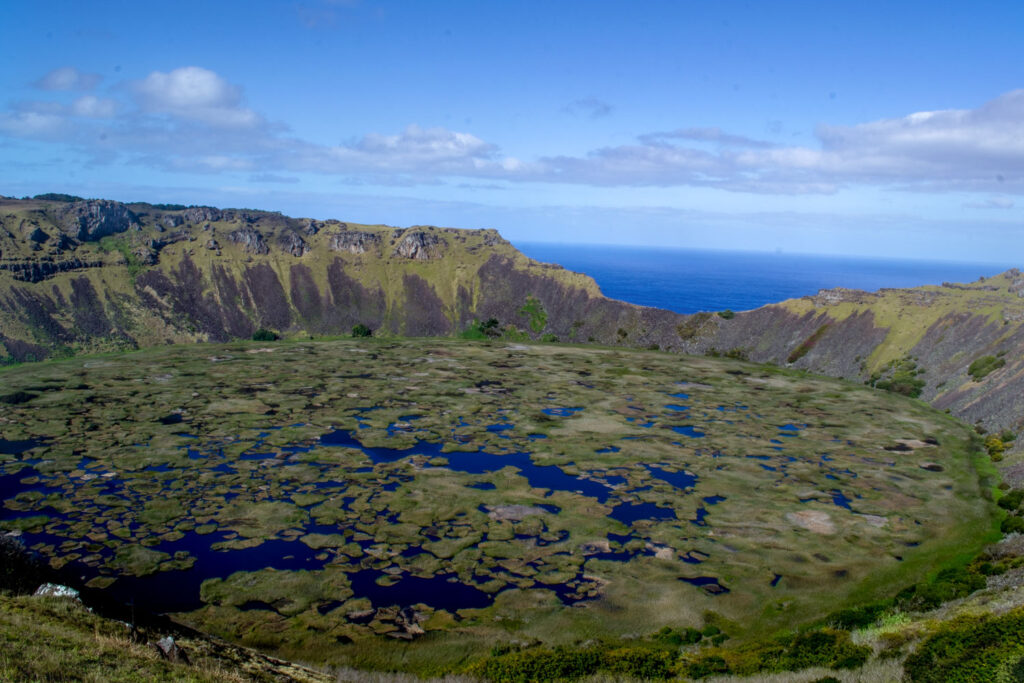
Orongo, on the rim of Rano Kau, is a different kind of visit: ceremonial stone houses, the crater on one side, the motu on the other. The strongest journeys here leave room for wind, site opening hours, and the fact that Rapa Nui is most powerful when it is not treated as a checklist of statues.
Hotels & Lodges
Stays shaped by the grassland
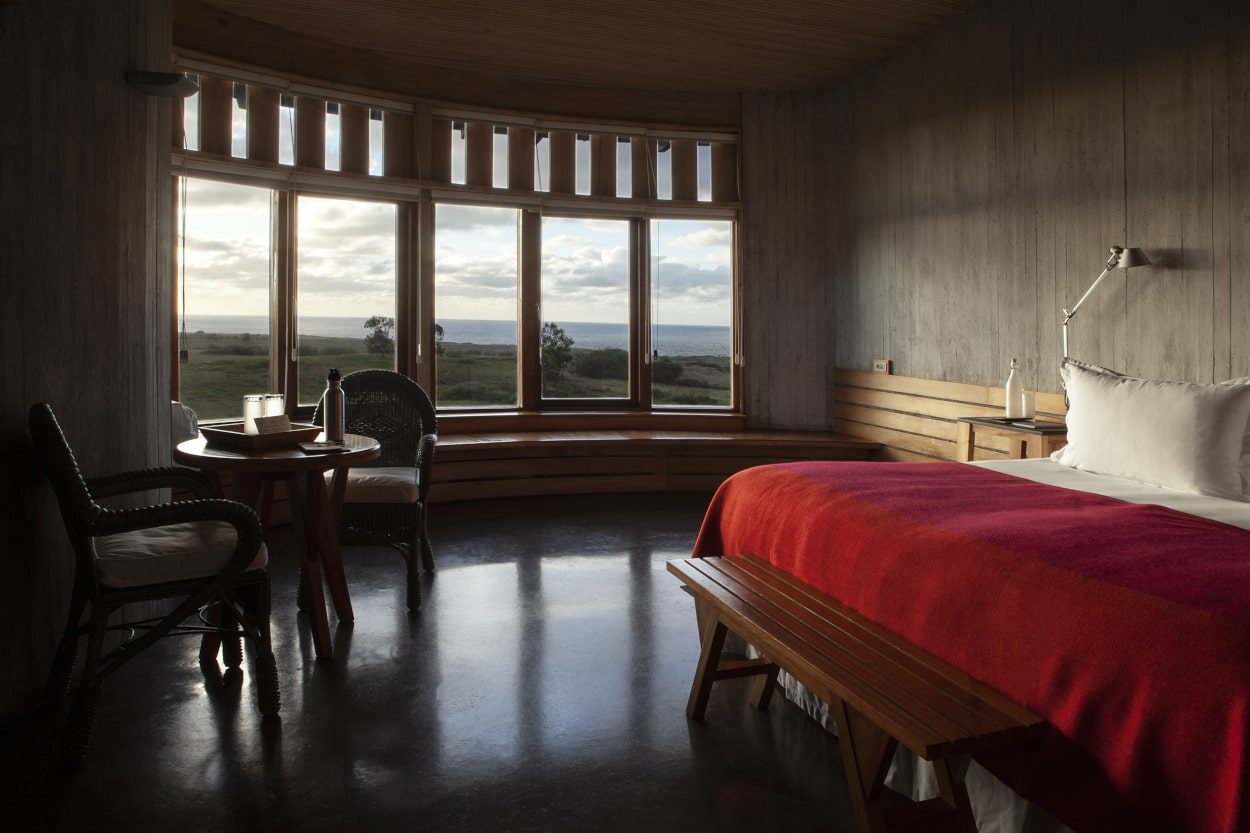
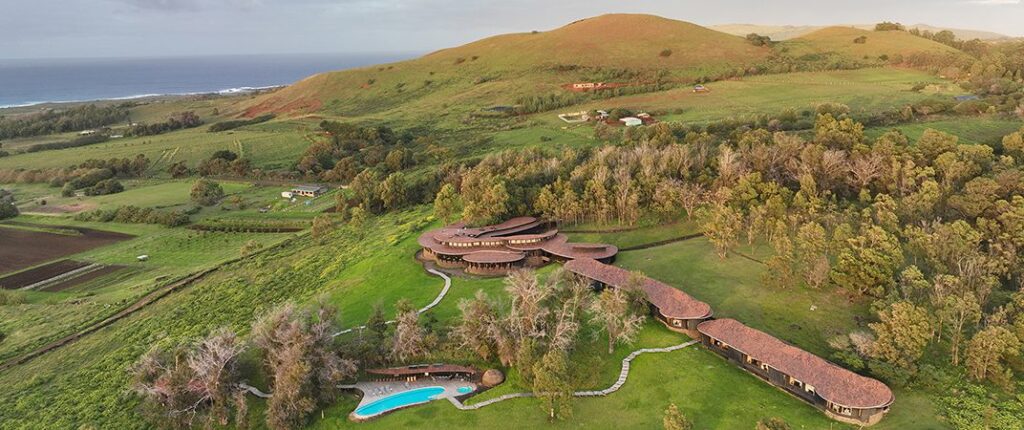
On Easter Island, where you stay shapes how the island is felt. Low lodges on the grassland, small hotels near Hanga Roa, and quieter rooms that keep the ocean in the window can hold the day without turning Rapa Nui into a circuit. The island is small enough that a good base matters more than changing beds.
Each stay is selected for sense of place and practical access to the sites — not for a catalogue of every room on the island.