
Chile · Easter Island
The Moai of Easter Island
Nearly nine hundred stone ancestors on a small volcanic island in the Pacific—how they were carved, how they travelled, and where to see them today.
What the moai are
Stone ancestors, facing inland
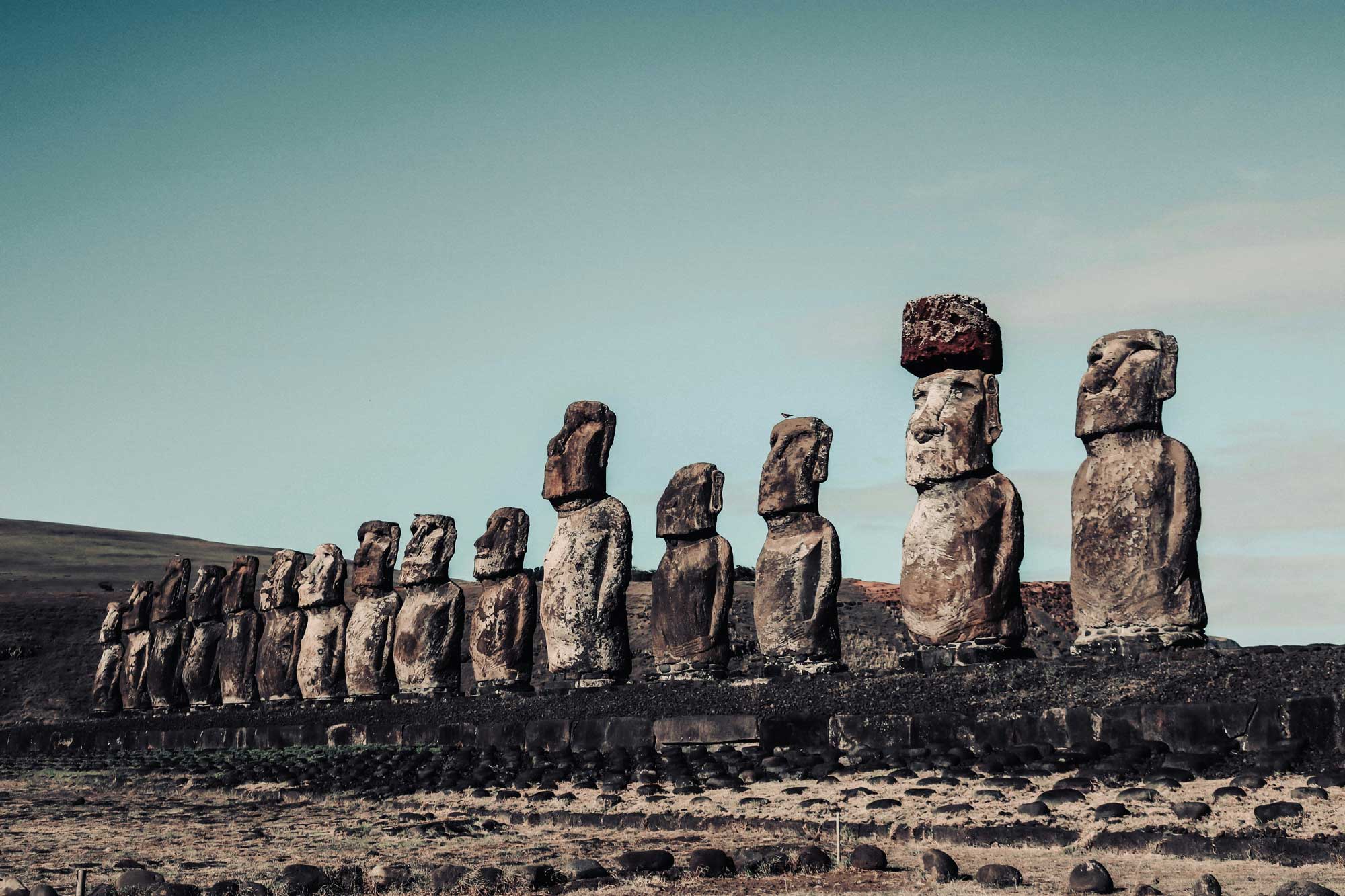
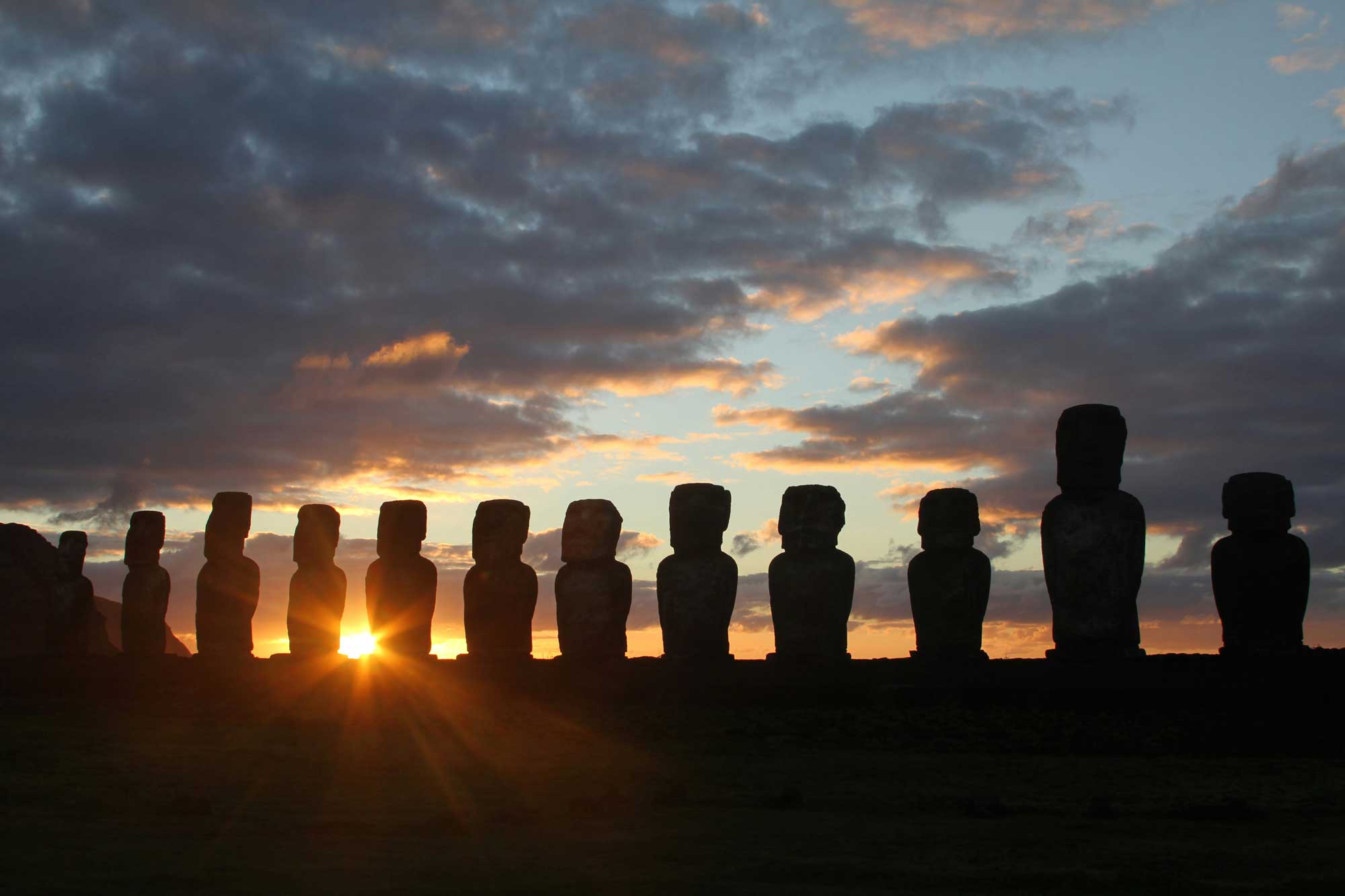
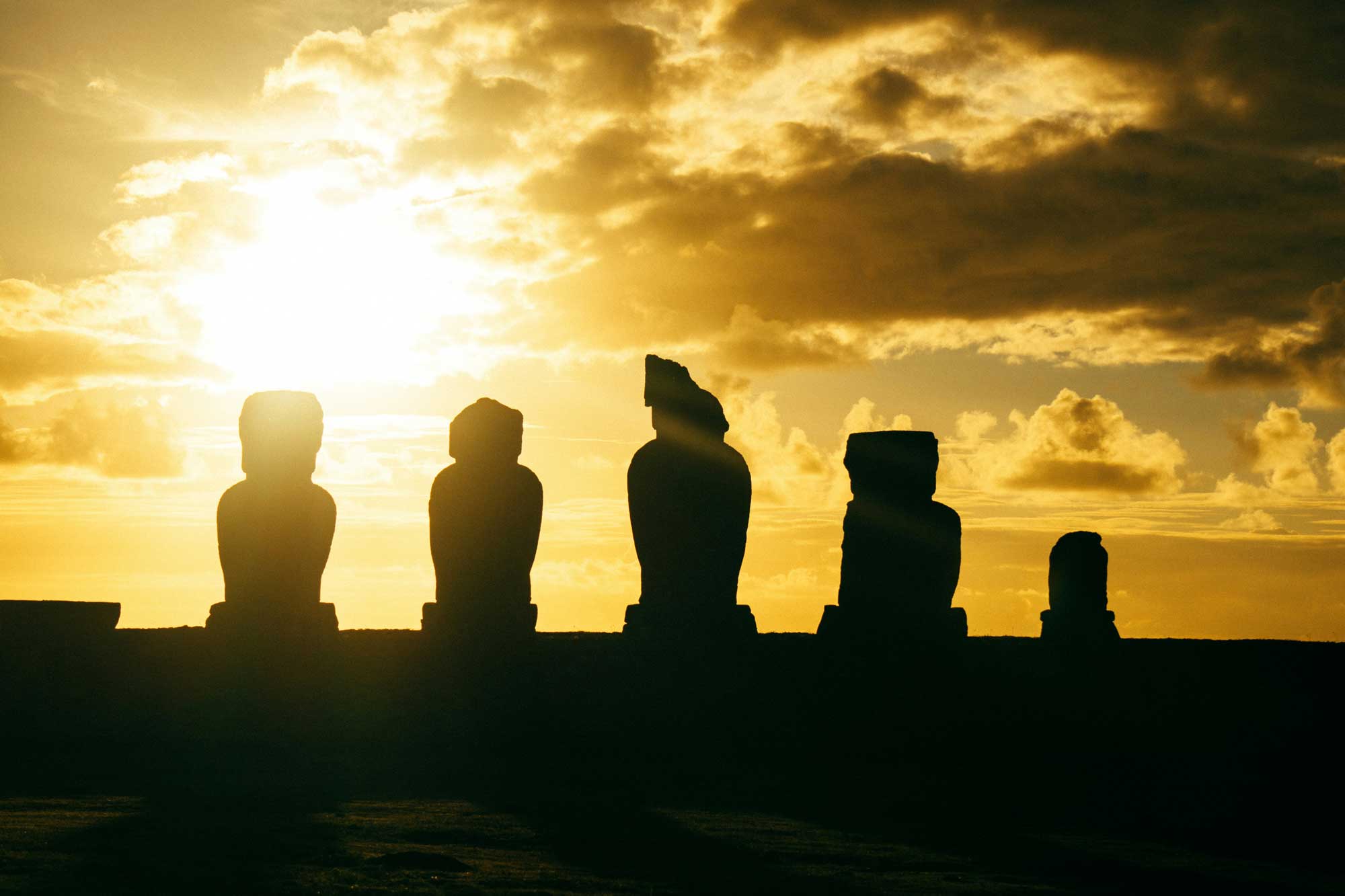
Across Easter Island—Rapa Nui to its people—the moai stand on stone platforms along the coast, most of them with their backs to the Pacific. They were carved by the Rapa Nui between roughly 1250 and 1500, and each was understood as the living face, aringa ora, of a deified ancestor, holding the mana that protected the family group settled around it.
That is why they look inland, over the villages and fields they once watched. The platforms beneath them, the ahu, were sacred ground and often burial places. The word moai itself simply means “statue”, and in English it is usually written without a plural “s”.
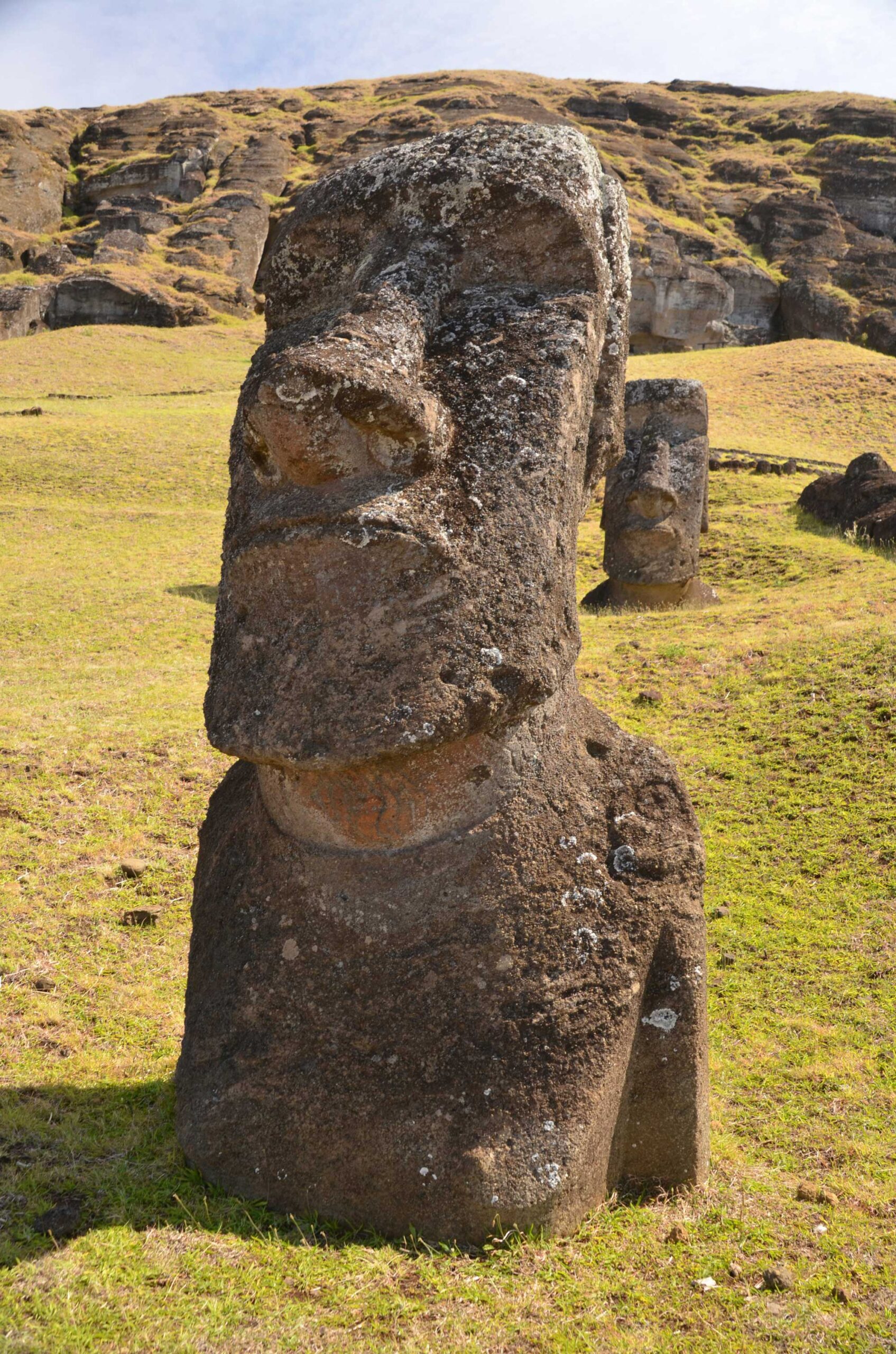
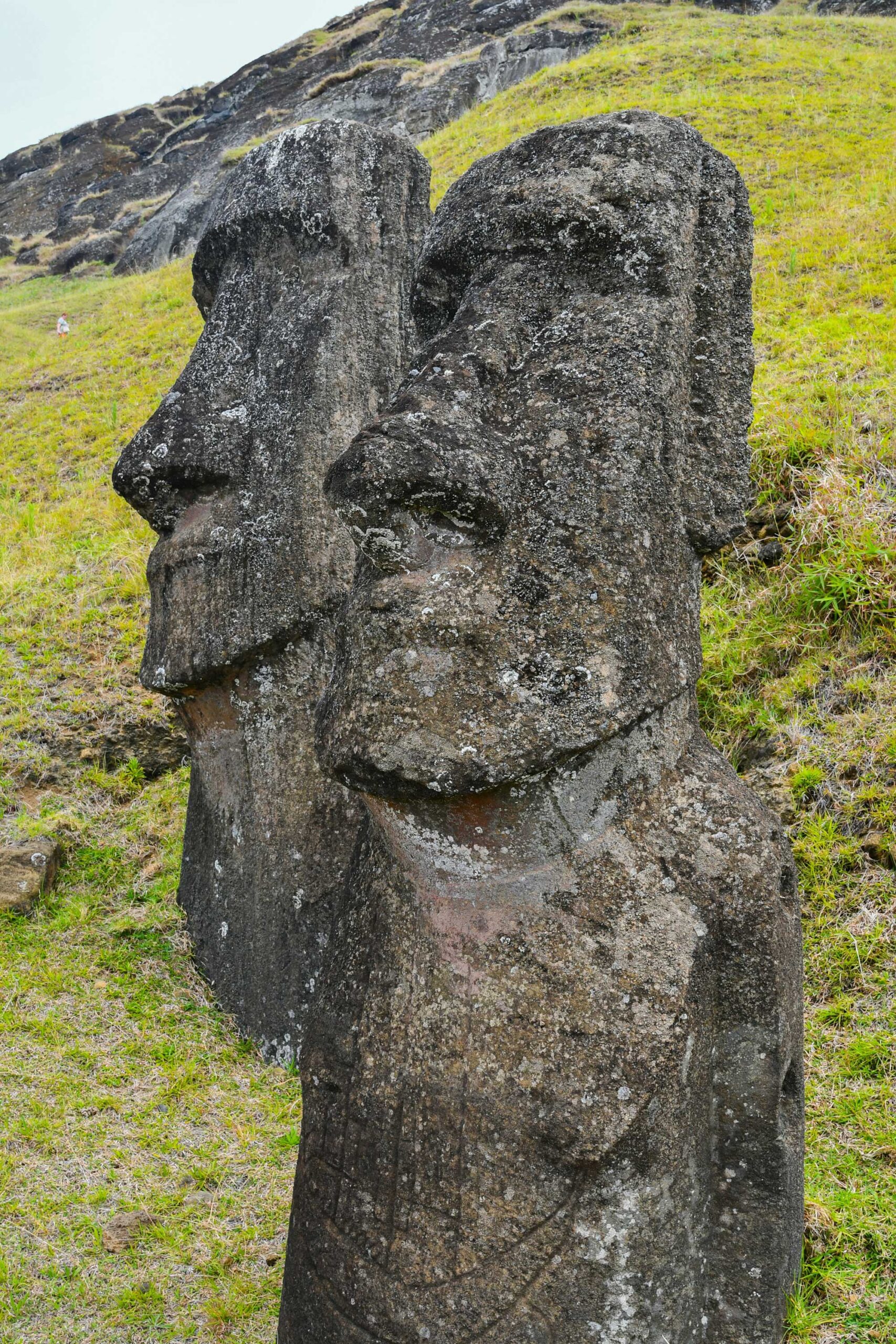
The famous heads are, in fact, complete figures. Every moai has a torso, long arms carved close to the body and hands resting above the belly; at the quarry of Rano Raraku the bodies are buried in the slope, which gives the place its strange, half-submerged character.
By the numbers
How many moai, how tall, how heavy
The most complete inventory, compiled by archaeologist Jo Anne Van Tilburg and the Easter Island Statue Project, recorded 887 moai. Nearly half—397—remain at the Rano Raraku quarry, 288 reached their platforms, and 92 lie along the ancient roads, apparently left in transit. Later finds bring the total to more than 900.
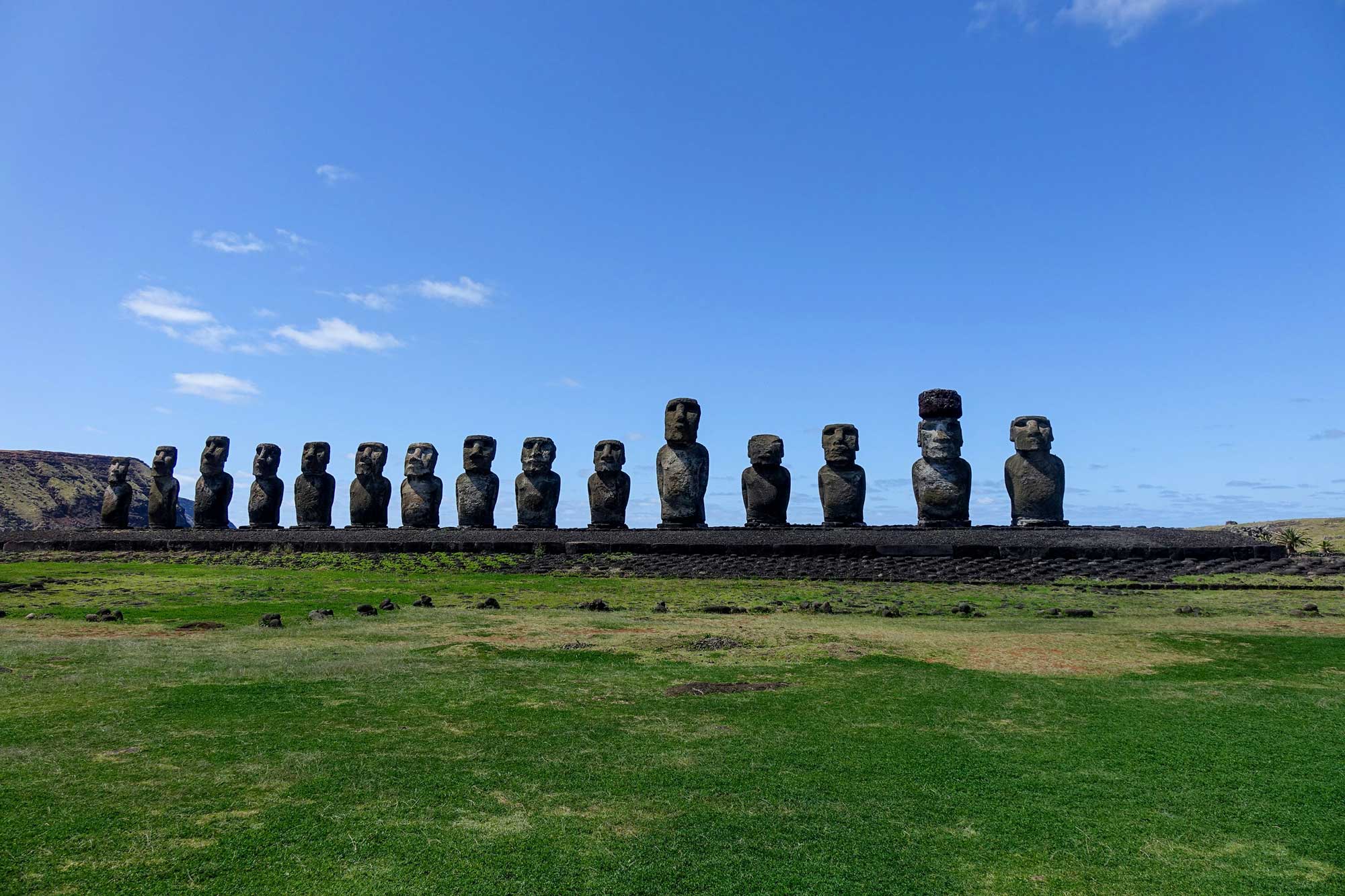
The average statue stands around 4 m (13 ft) and weighs about 12.5 tonnes. Paro, at Ahu Te Pito Kura on the north coast, is the tallest ever raised—almost 10 m (32 ft) and about 82 tonnes—while the heaviest, at around 86 tonnes, stands on Ahu Tongariki. Still joined to the rock at Rano Raraku, the unfinished figure known as El Gigante would have measured about 21 m (69 ft).
Rano Raraku
Carved from the side of a volcano
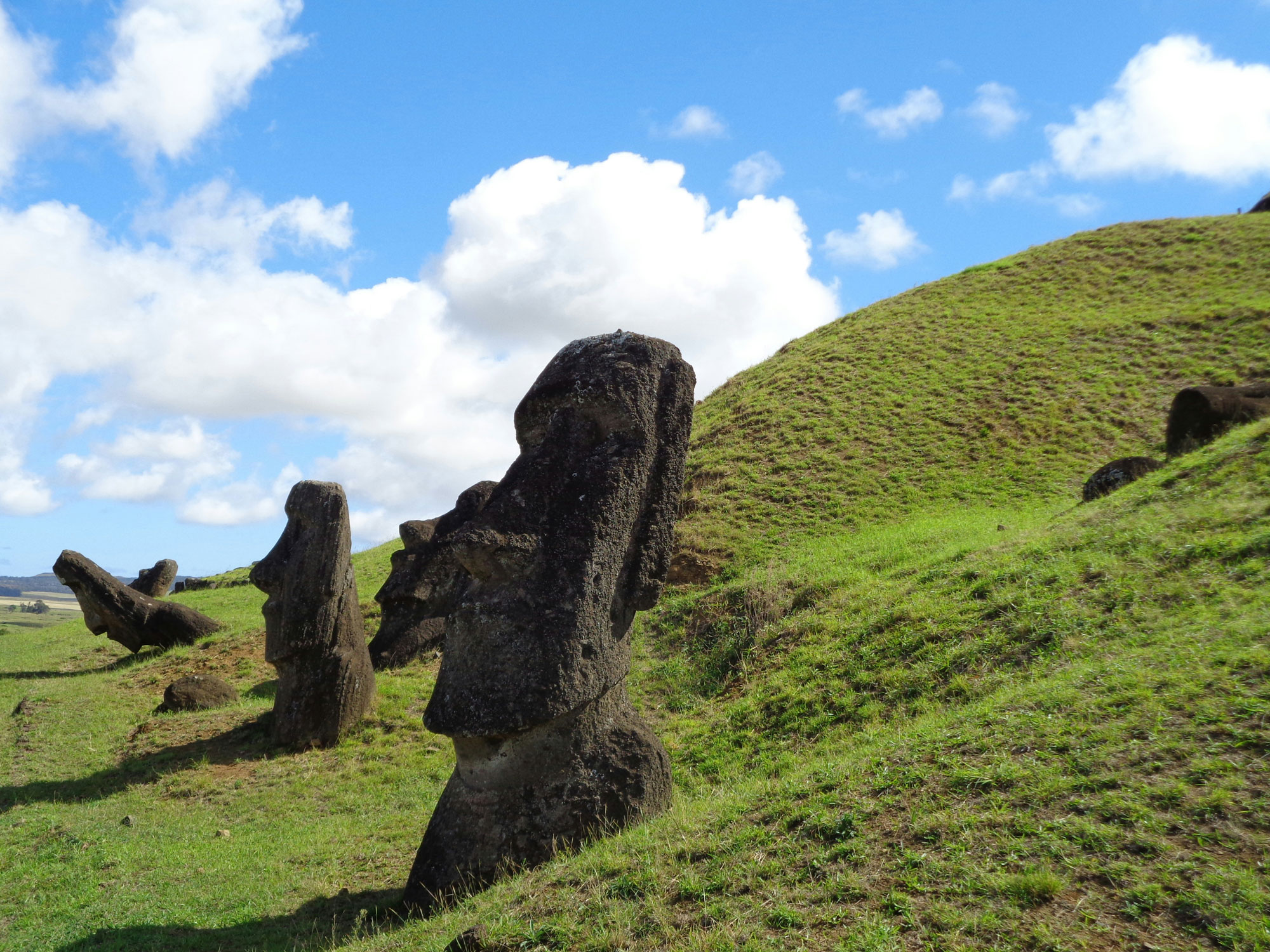
Around 95 percent of the moai were cut from the volcanic tuff of Rano Raraku, a small crater near the island’s south-east coast. Carvers worked the rock face with basalt hand tools called toki, shaping the front and sides of each figure while it was still attached to the bedrock, then freeing it along the back and lowering it down the slope.
At the foot of the quarry, statues were stood upright in pits for their final carving—and many never left. Almost four hundred remain on the outer slopes and inside the crater, in every stage of work, many buried to the shoulders by centuries of sediment. Excavations have revealed complete bodies beneath the grass, some with carvings on their backs, and among the figures is Tukuturi, one of the island’s very few kneeling moai.
It is the site we would always visit first. Once you have walked the quarry, every platform on the island reads differently.
How the moai were moved
The statues that walked
How statues weighing twelve tonnes or more travelled as far as 18 km (11 mi) across the island, with no wheels or draught animals, has been debated for well over a century. Rapa Nui oral tradition offers its own answer: the moai walked, moved by mana.
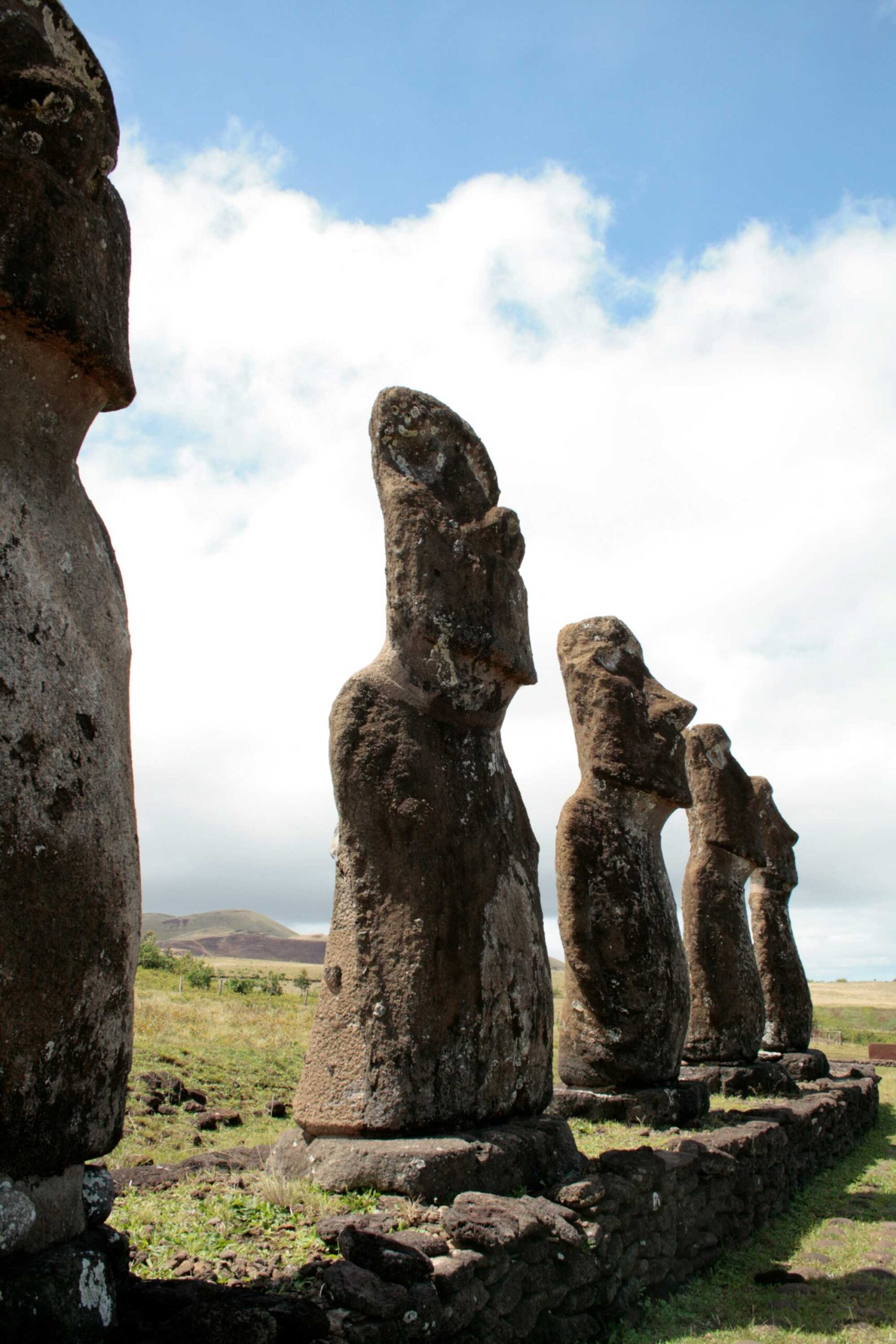
Researchers long assumed wooden sledges or log rollers. The picture shifted when archaeologists Terry Hunt and Carl Lipo, working with Rapa Nui archaeologist Sergio Rapu Haoa, studied the statues lying along the ancient roads—their wide, D-shaped bases and forward lean suggested they had been moved upright. In 2012, a team of eighteen people with three ropes rocked a 4.35-tonne replica from side to side and “walked” it forward over the ground.
The question is not entirely settled, but the walking hypothesis is now the most widely supported, and it also accounts for the broken moai left face-down along the roads, statues that fell on the way and were never raised again.
Pukao and eyes
Topknots of red stone, eyes of coral
Some of the later moai wear a pukao, a cylinder of red volcanic scoria quarried at the small crater of Puna Pau, inland from Hanga Roa. It represents a topknot of hair—where, in Polynesian belief, mana was concentrated—and red carried a sacred meaning across the Pacific. How blocks of several tonnes were set on the statues’ heads is still studied today.
The eyes came last. In the late 1970s, at Anakena, archaeologists including Sergio Rapu Haoa found a moai eye of white coral with a pupil of red scoria, and the eyes may have been set only for ceremonies. At Ahu Ko Te Riku, in Tahai, a single moai has had its eyes restored—the easiest place to see how different a statue looks once it has been given its gaze.
Why the moai fell
Toppled, then raised again
When the Dutch navigator Jacob Roggeveen reached the island in 1722, the moai still stood on their platforms. Over the following century they came down—pulled over during conflicts between rival groups, a period Rapa Nui tradition remembers as huri mo’ai, and possibly by earthquakes. By 1868 not a single moai remained standing on an ahu; only the buried figures at Rano Raraku stayed upright.
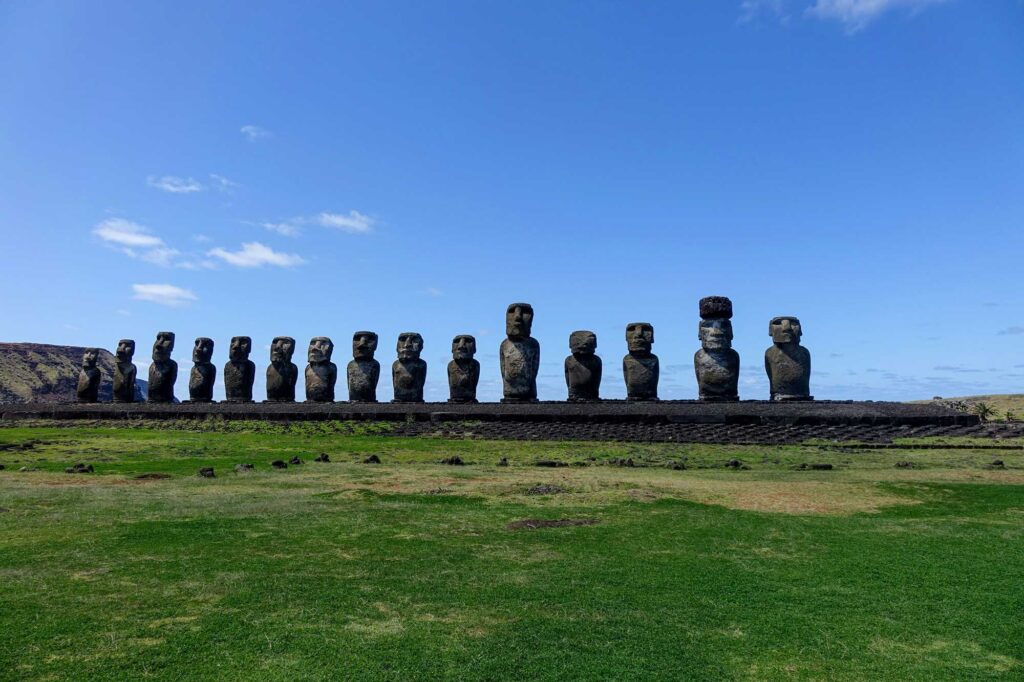
Every moai standing on a platform today has been raised again. The first was at Anakena in 1956, followed by William Mulloy’s restorations of Ahu Akivi in 1960 and the Tahai complex in 1970. The most ambitious was Ahu Tongariki: scattered inland by the tsunami of 1960, its fifteen moai were re-erected between 1992 and 1996 by a Chilean team led by Claudio Cristino, with a crane donated by the Japanese company Tadano.
Where to see the moai
Six sites, and when to visit them
Rano Raraku is the volcanic crater where around 95 percent of Easter Island’s moai were carved. It lies near the south-east coast, about 20 km (12 mi) from Hanga Roa, and nearly 400 moai remain there in every stage of carving, many buried to the shoulders. Entry requires the Rapa Nui National Park ticket, which allows a single visit, and an accredited guide. Allow two to three hours, and choose a clear morning.
Planning
Visiting the moai
Most moai sites on Easter Island lie within Rapa Nui National Park, managed since 2017 by the Ma’u Henua indigenous community. The park ticket is valid for ten consecutive days and allows unlimited visits to most sites, but only one entry each to Rano Raraku and Orongo. Since October 2025 it has cost CLP 95,000 for foreign adults; it can be bought online through the official park website or at the Ma’u Henua office in Hanga Roa.
FAQ
Questions about the moai

Easter Island rewards a slower pace—a few unhurried days, the quarry before the platforms, and a Rapa Nui guide who can speak about the ancestors behind each statue. If you are shaping a journey around the island, we are happy to connect you with a local specialist.
For the island as a whole, start with Easter Island. For the ceremony that followed the age of the moai, read Orongo, on the rim of Rano Kau. For a quiet base outside Hanga Roa, read Explora Rapa Nui.
Sources: Jo Anne Van Tilburg and the Easter Island Statue Project; Lipo, Hunt and Rapu Haoa, “The ‘walking’ megalithic statues (moai) of Easter Island”, Journal of Archaeological Science (2013); UNESCO World Heritage Centre, Rapa Nui National Park; Ma’u Henua, Rapa Nui National Park visitor information. Last reviewed September 2026.