
Chile · Easter Island
Orongo, on the rim of Rano Kau
A crater lake on one side, a sea cliff on the other, and the three islets where the Birdman was chosen each spring.
The setting
Between a crater and the Pacific
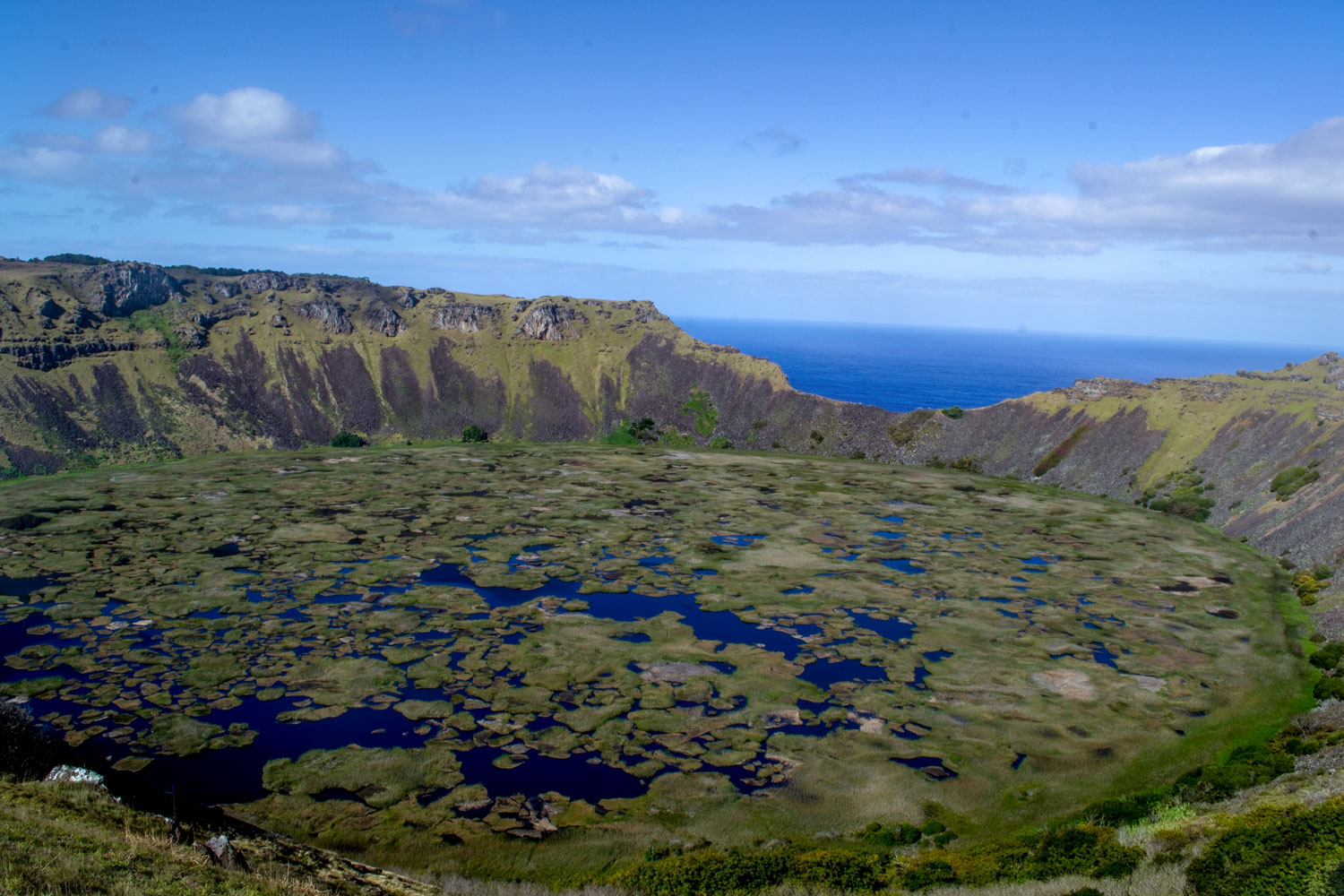
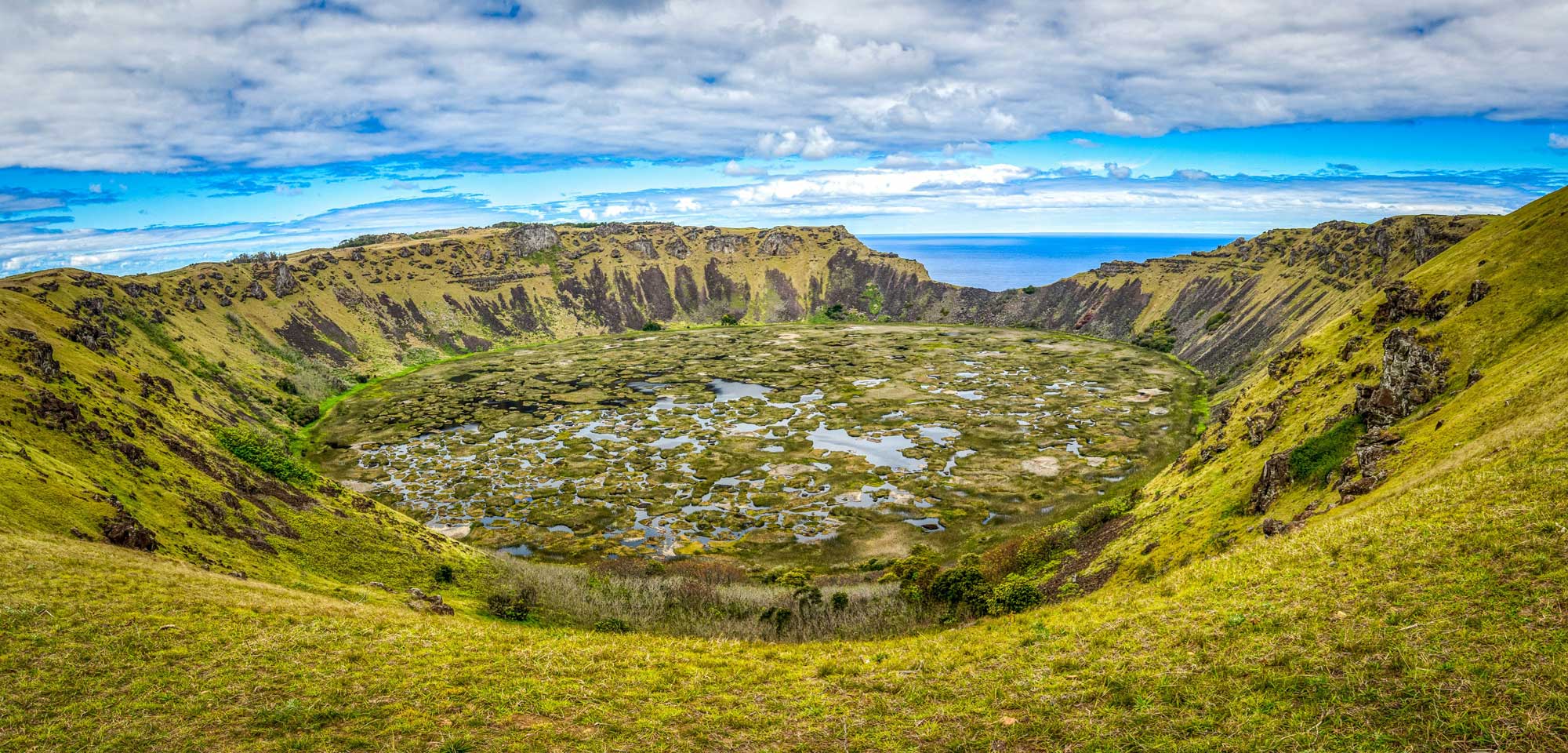
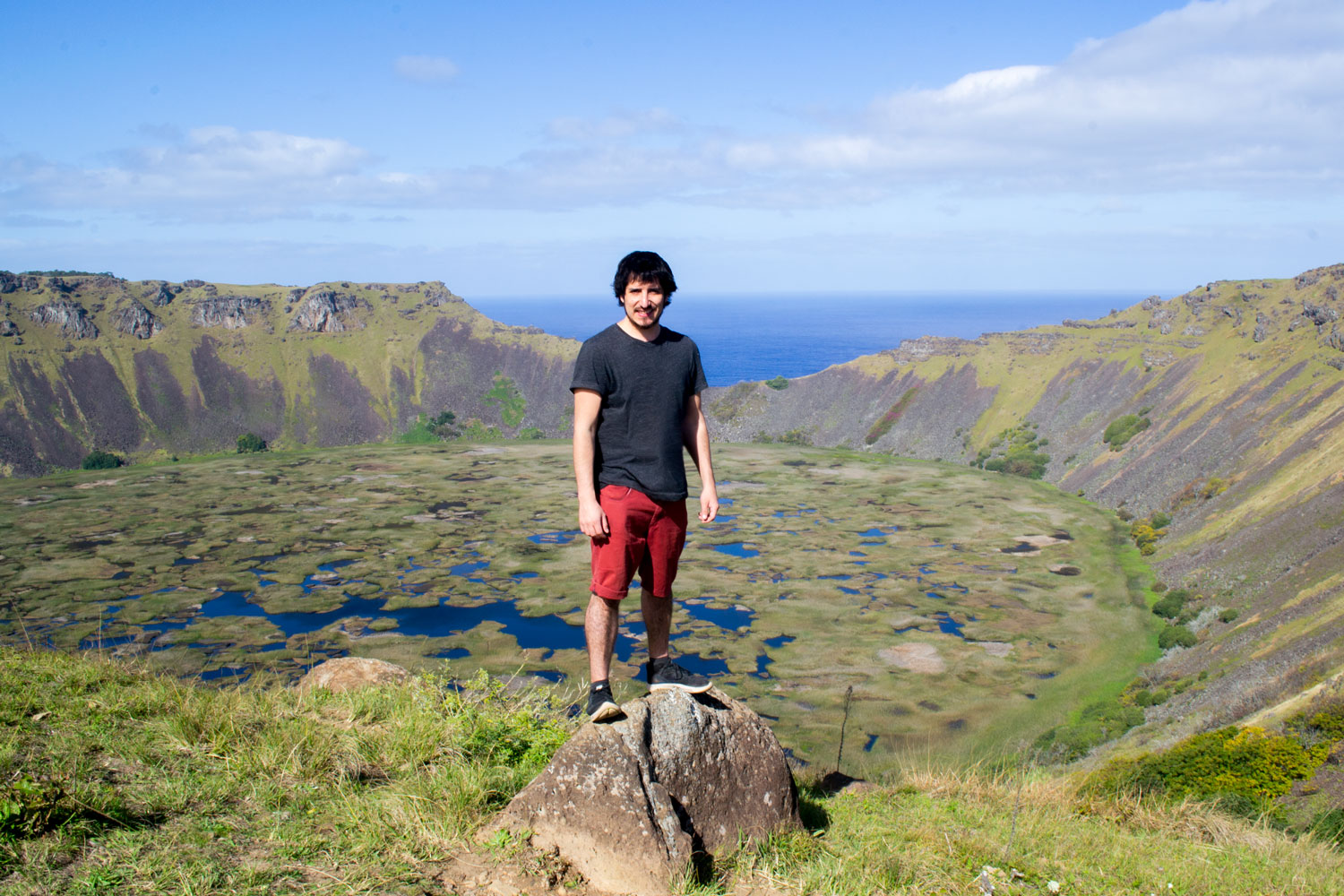
Rano Kau is the volcano at the south-western tip of Easter Island, 324 m (1,063 ft) high. Its crater is about 1.5 km (1 mi) across, and its floor is a lake patched with floating mats of totora reed, green, brown and open water in turn.
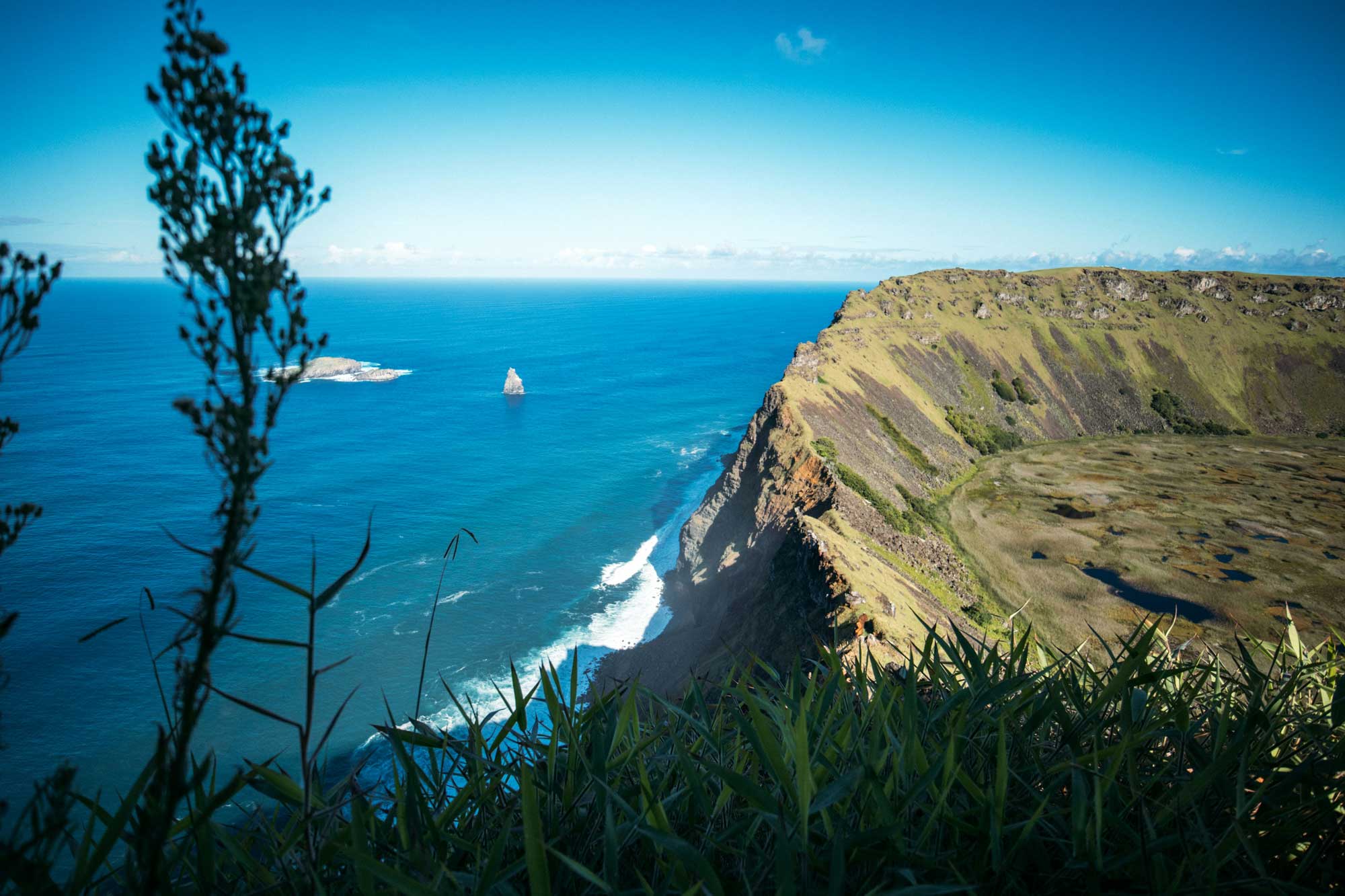
Orongo sits on the narrowest part of the rim. Behind the village the ground drops into the crater. In front, it falls almost 300 m (1,000 ft) to the sea, and just offshore lie three islets: Motu Kao Kao, a sharp needle of rock, then Motu Iti, then Motu Nui, the largest.
Few places on the island explain it this well. From one spot you see the volcano that made the land, the ocean that isolates it, and the islets that organised its last great ritual.
Tangata Manu
A race for the first egg
Every spring the manutara, the sooty tern, came back to nest on Motu Nui. At Orongo the island’s chiefs waited for it. Each backed a competitor, a hopu manu, who climbed down the cliff, swam across to the islet on a float of reeds and waited there, sometimes for weeks, for the first egg of the season.
Whoever found it called the news across to the rim, then swam back with the egg tied to his head and climbed up again. His patron became Tangata Manu, the Birdman, chosen by the god Make Make. He spent the next year in seclusion, and his group held a year of privilege.
The last ceremony took place in 1866 or 1867, a few years after slave raids and disease had devastated the island. Missionaries arrived at the same time, and the competition was never held again.
The village
Low houses of stacked stone
The village is made of some fifty-three houses, built of flat basalt slabs laid one over the other and closed into a low vault, with a single doorway so small you enter on your knees. They stand in rows along the rim, most of them facing the sea. They were lived in only for the weeks of the ceremony, and most were restored in the twentieth century.
At the end of the village, at Mata Ngarau, the rocks are covered in petroglyphs: hundreds of Birdmen, crouched figures with a bird’s head, some of them holding an egg, and the face of Make Make. One house once held a basalt moai, Hoa Hakananai’a. It was taken away by the British ship HMS Topaze in 1868 and is now in the British Museum. Rapa Nui has asked for it back.
Orongo and the moai
An island that turned toward the sea
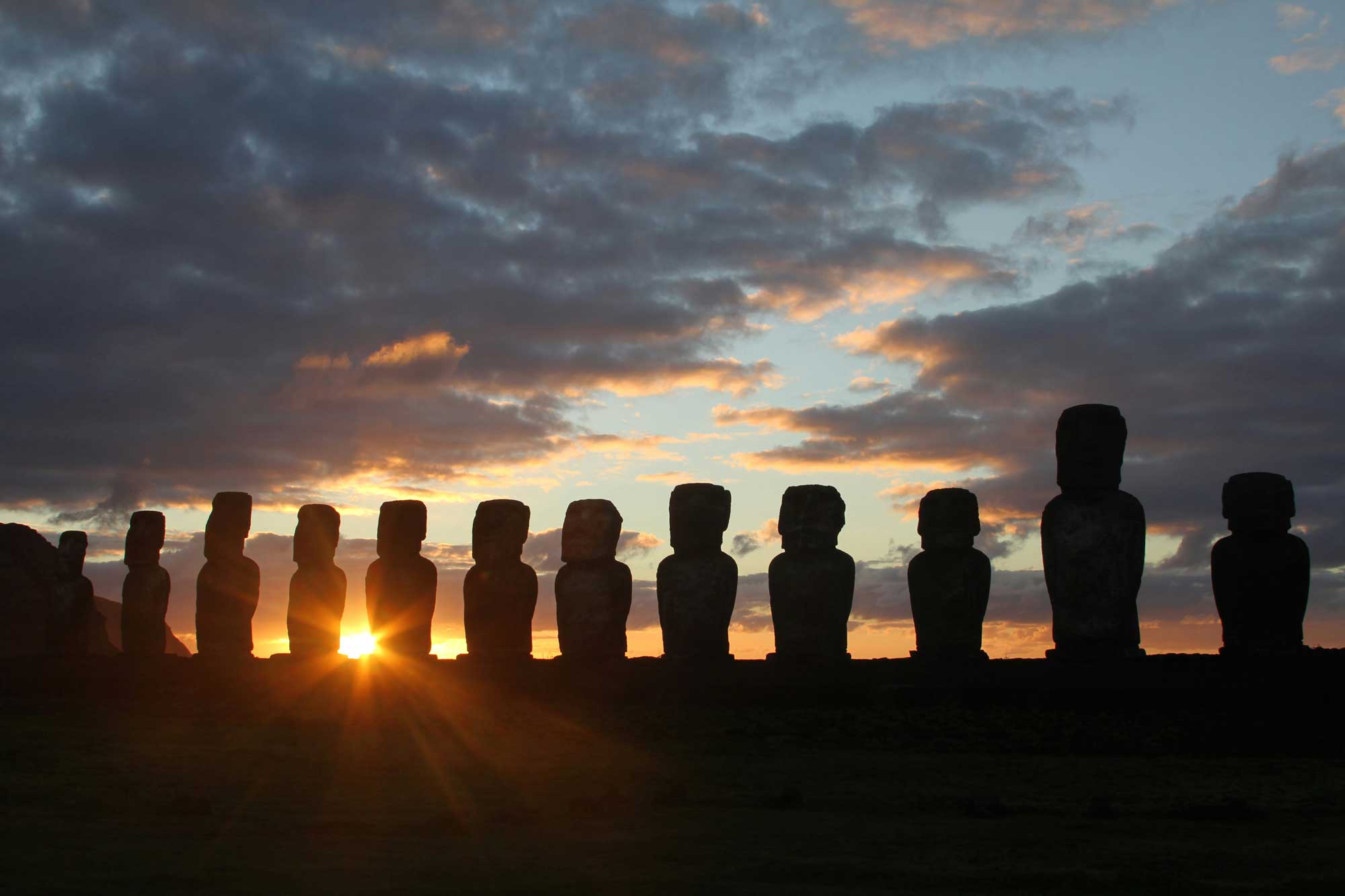
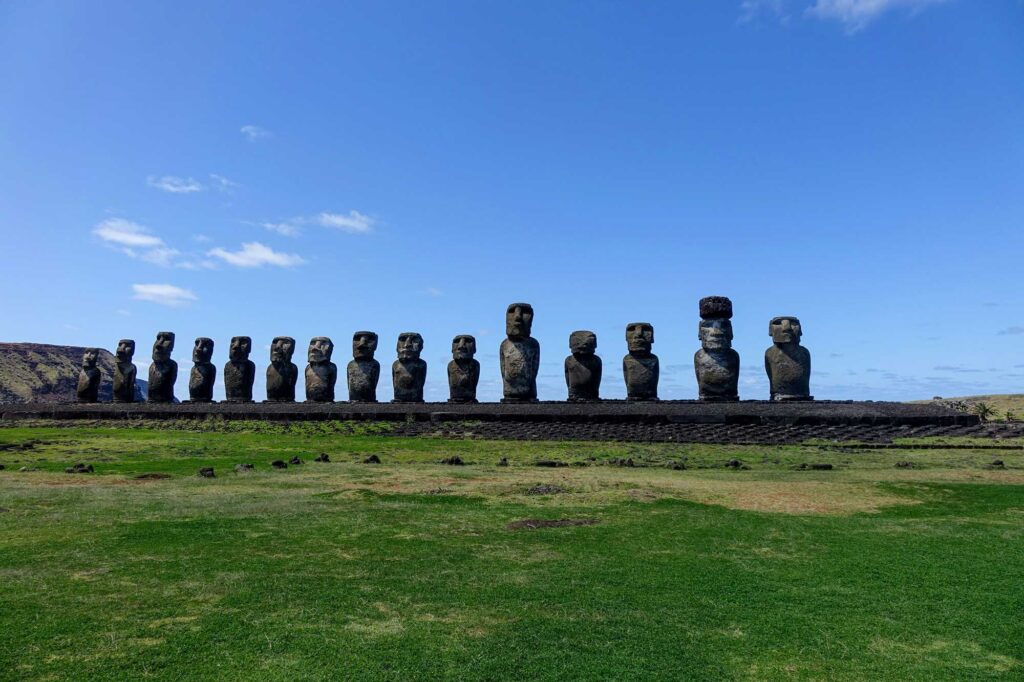
Most of Easter Island’s fame comes from the moai: the quarry of Rano Raraku, where hundreds lie on the slopes, and the long platforms such as Ahu Tongariki, where fifteen statues stand with their backs to the ocean, looking inland over the land they protected.
Orongo tells the other half of the story. The Birdman cult rose as the age of the great moai came to an end, and the island’s most important ritual moved to a cliff edge, facing out to sea. Seeing both, the quarry and the rim, is what makes Rapa Nui make sense.
Visiting
Walk up the old path
The road from Hanga Roa reaches the rim in a few minutes by car. The better way up is Te Ara o Te Ao, the path the Birdman ceremony followed from Mataveri, on the edge of town: about 3 km (2 mi) and 300 m (1,000 ft) of climbing, through small gardens and a stand of eucalyptus, then out onto the open slope with the ocean behind you. Allow an hour and a half to two hours.
The path reaches the rim at the crater viewpoint. From there it is a short walk along the edge to the ranger post and the village. Keep to the marked trail. The houses are fragile, and the rim is narrow above both drops.
Planning
Before you go
Orongo is part of Rapa Nui National Park, run by the Ma’u Henua indigenous community. One ticket covers the park for ten consecutive days, but allows only one entry to Orongo and one to Rano Raraku. Plan those two visits for your clearest days.
Buy it online before you travel, or at the Ma’u Henua office in Hanga Roa. Check the current price on the official site: since October 2025 it has been CLP 95,000 for foreign adults.

Orongo is a small site, and it holds a lot. Come up slowly, on foot if you can, and leave time on the rim for the wind, the islets and the crater below.
For the rest of the island, start with Easter Island. For a base outside Hanga Roa, read Explora Rapa Nui. For more field notes, browse The Journal.