
Chile
Atacama Desert
One of the driest places on Earth—salt flats, volcanic horizons, mineral colour, and some of the clearest night skies on the planet.
Destination
Atacama Desert
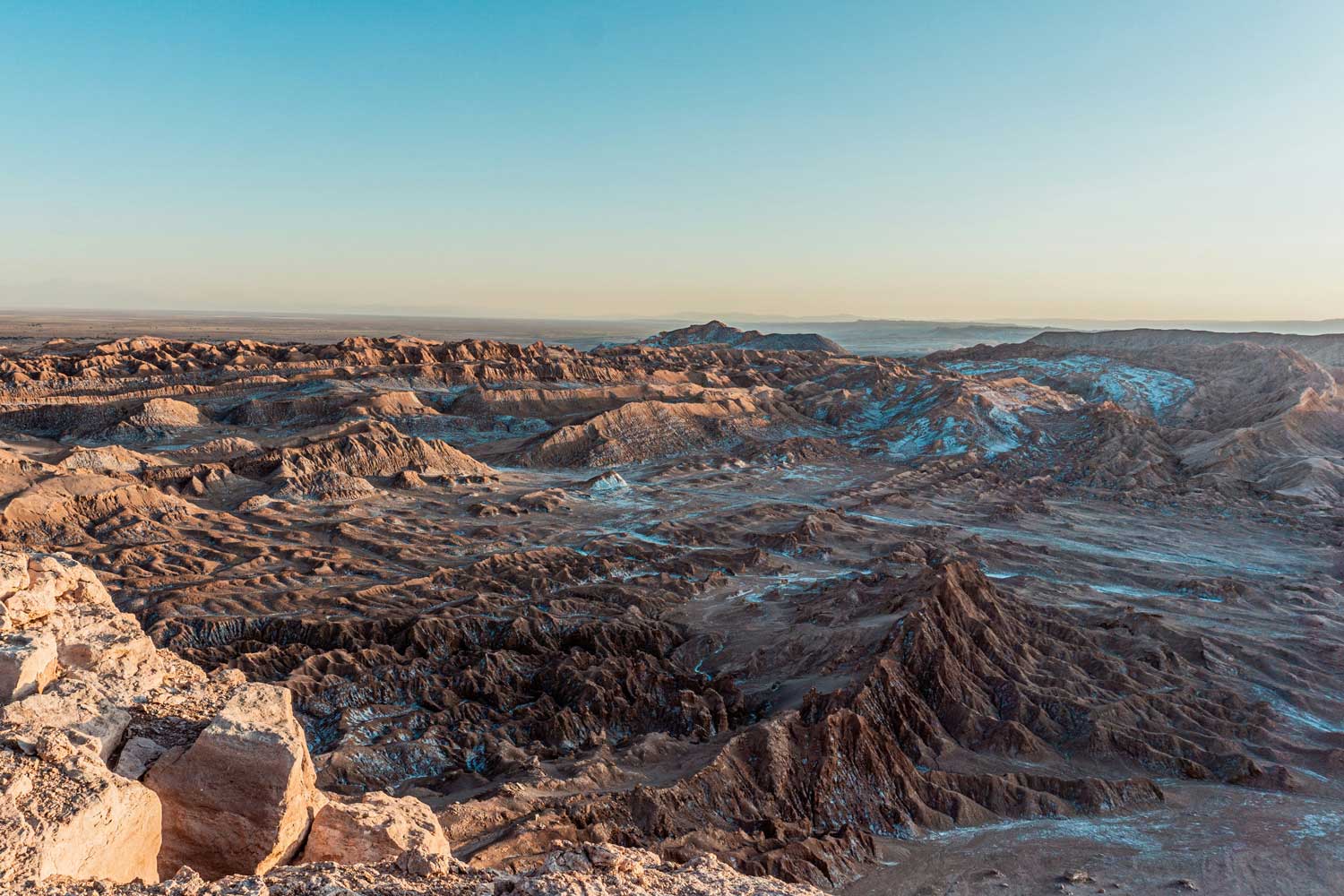
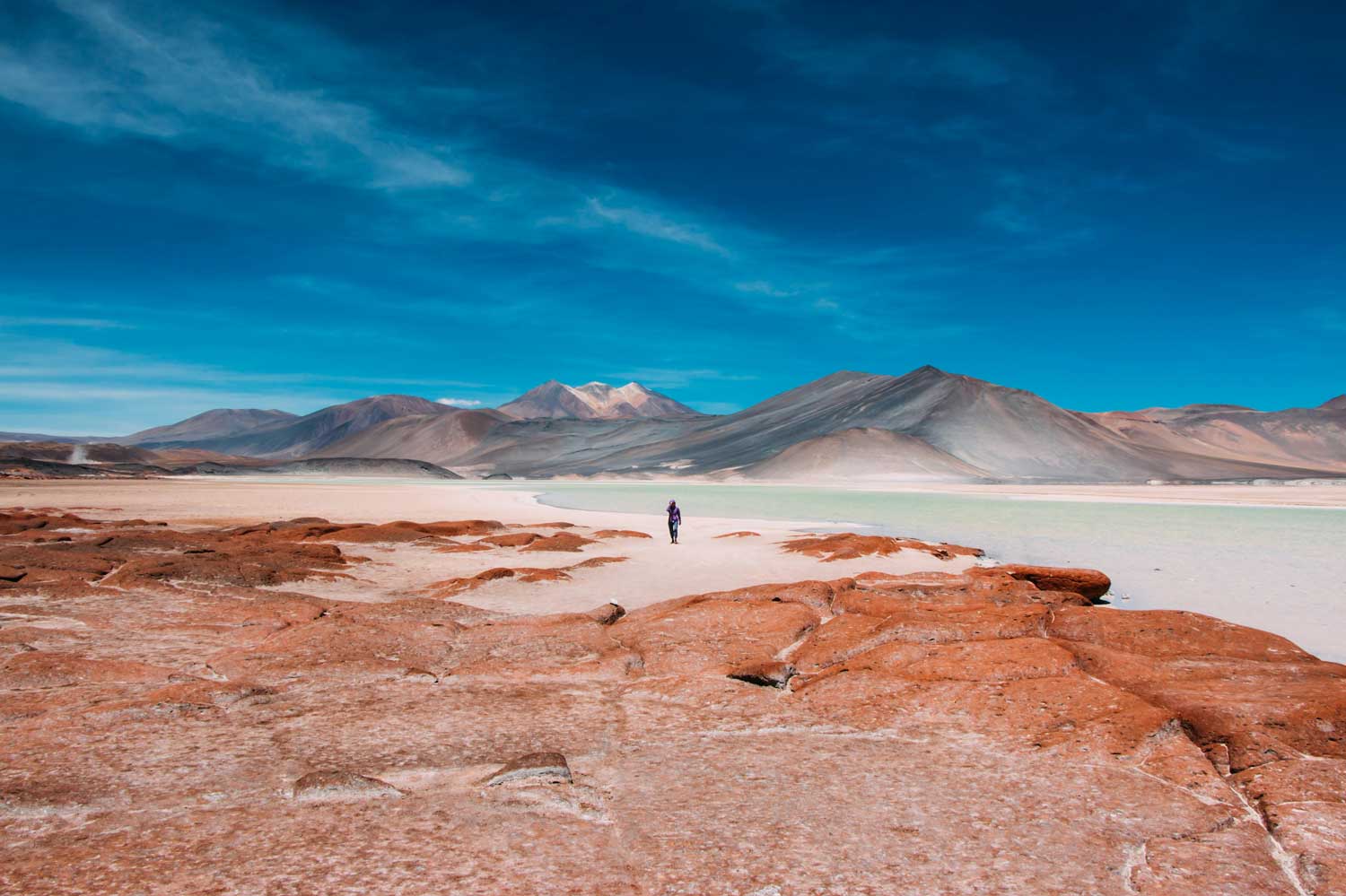
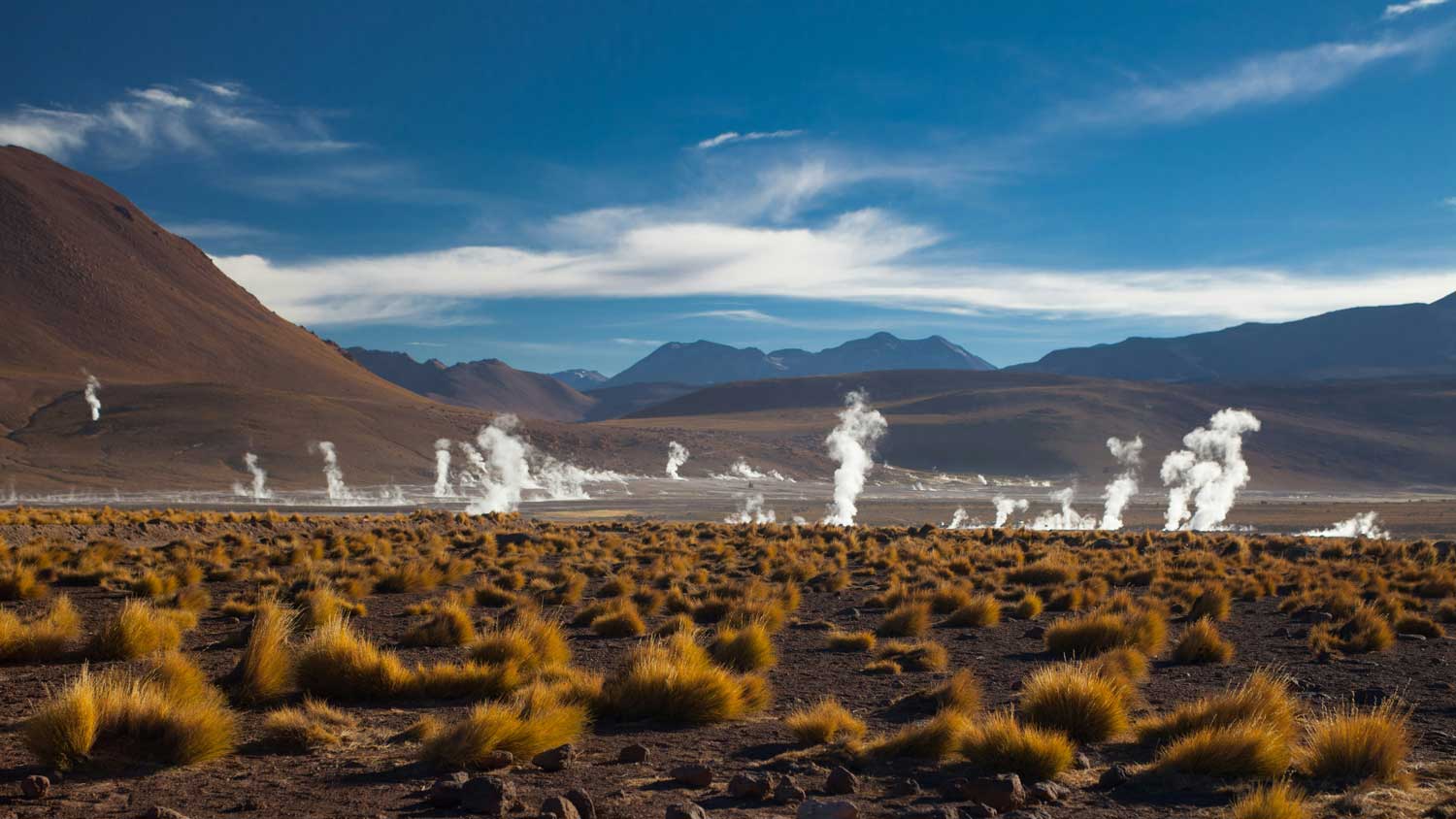
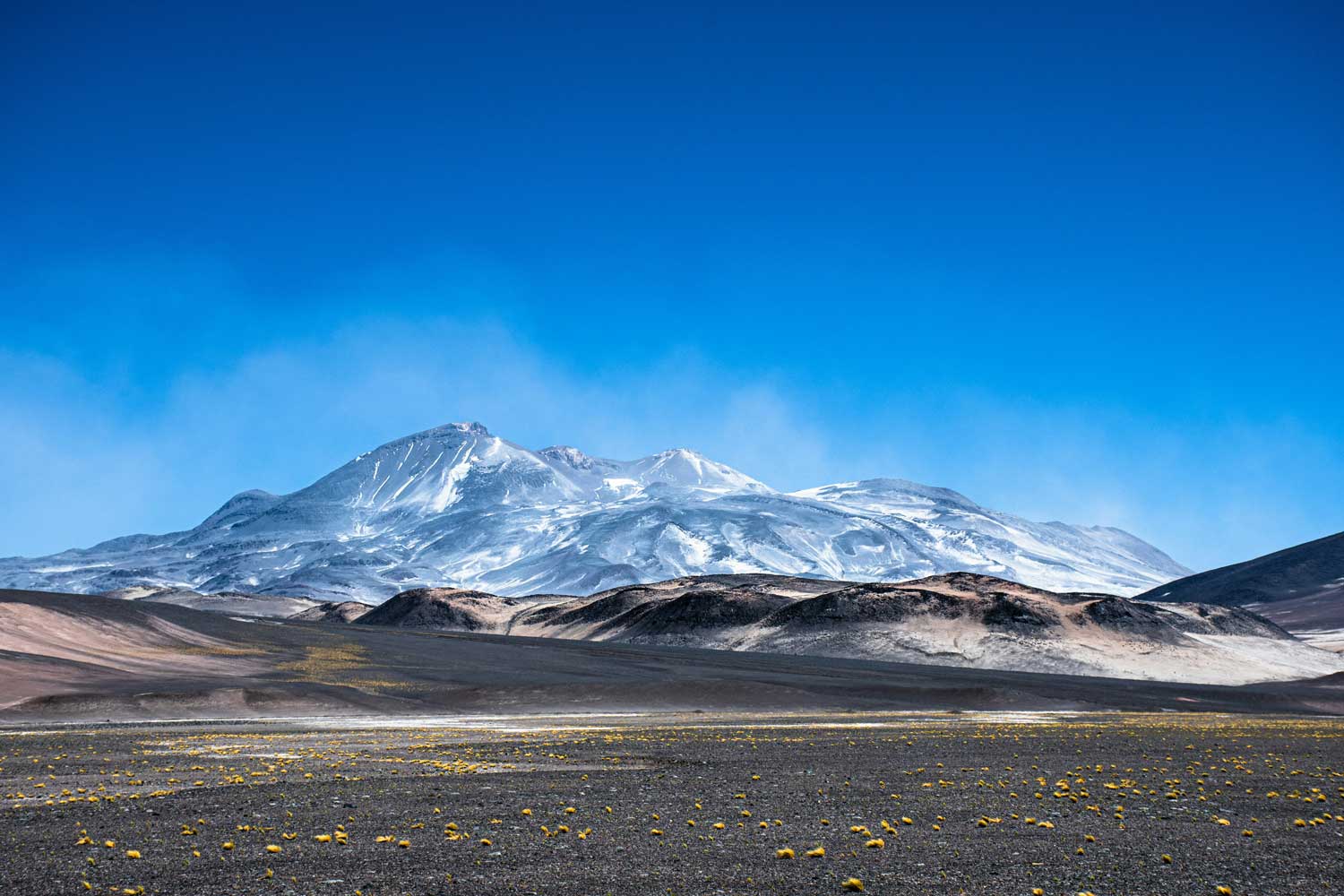
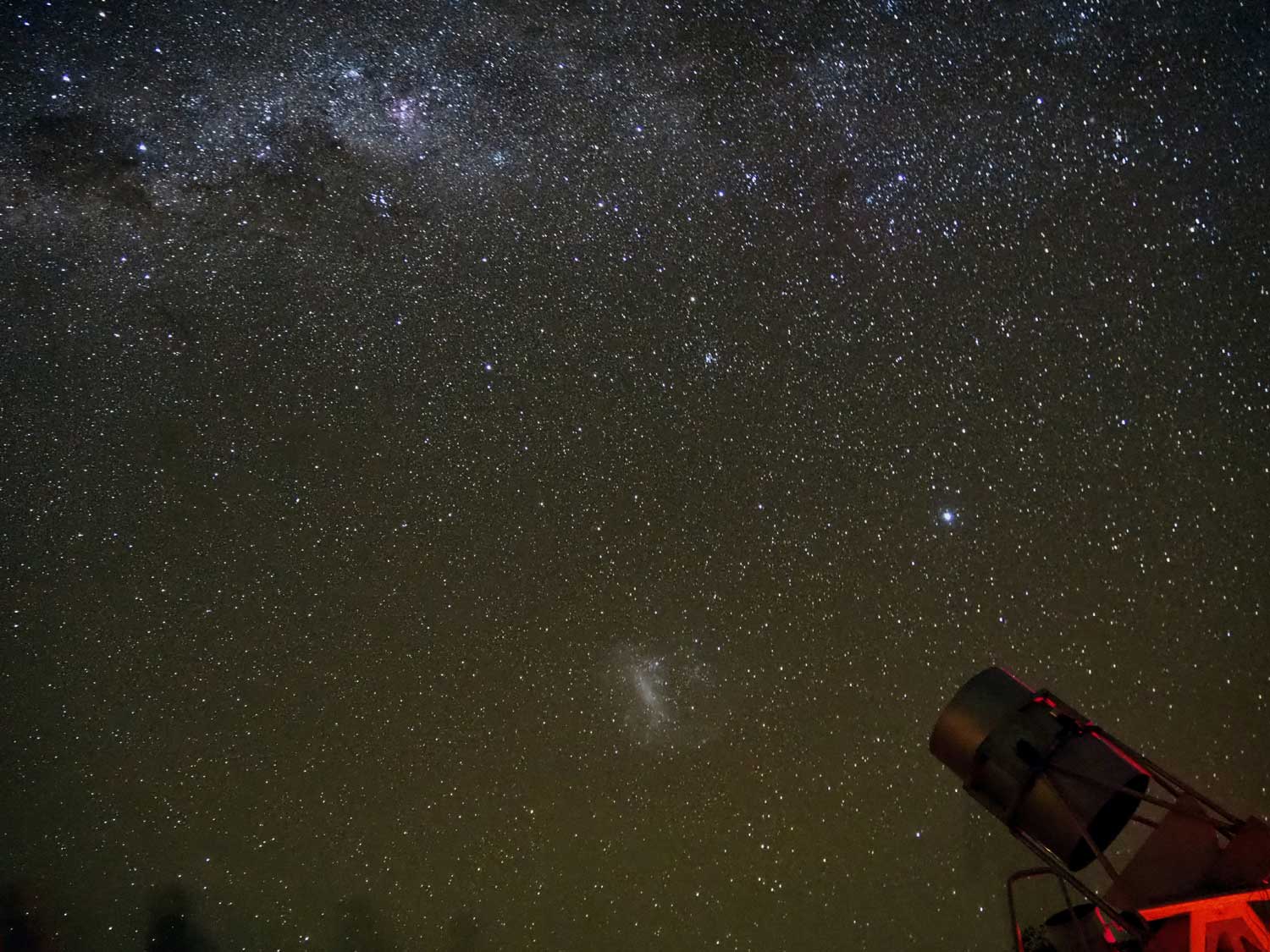
In northern Chile, the Atacama opens as a high desert of extremes: salt basins and wind-carved valleys, geothermal fields at altitude, lagoons that hold flamingos, and nights clear enough for serious astronomy. Around San Pedro de Atacama, the landscape shifts quickly—from Moon Valley viewpoints to altiplano water and early geyser fields—while evenings open into a sky that feels closer than almost anywhere else on Earth.
It is a destination for travellers who want scale, silence and carefully paced exploration: comfort at the edge of a genuinely remote geography, where light, altitude and distance shape every day.
Exploring the Atacama
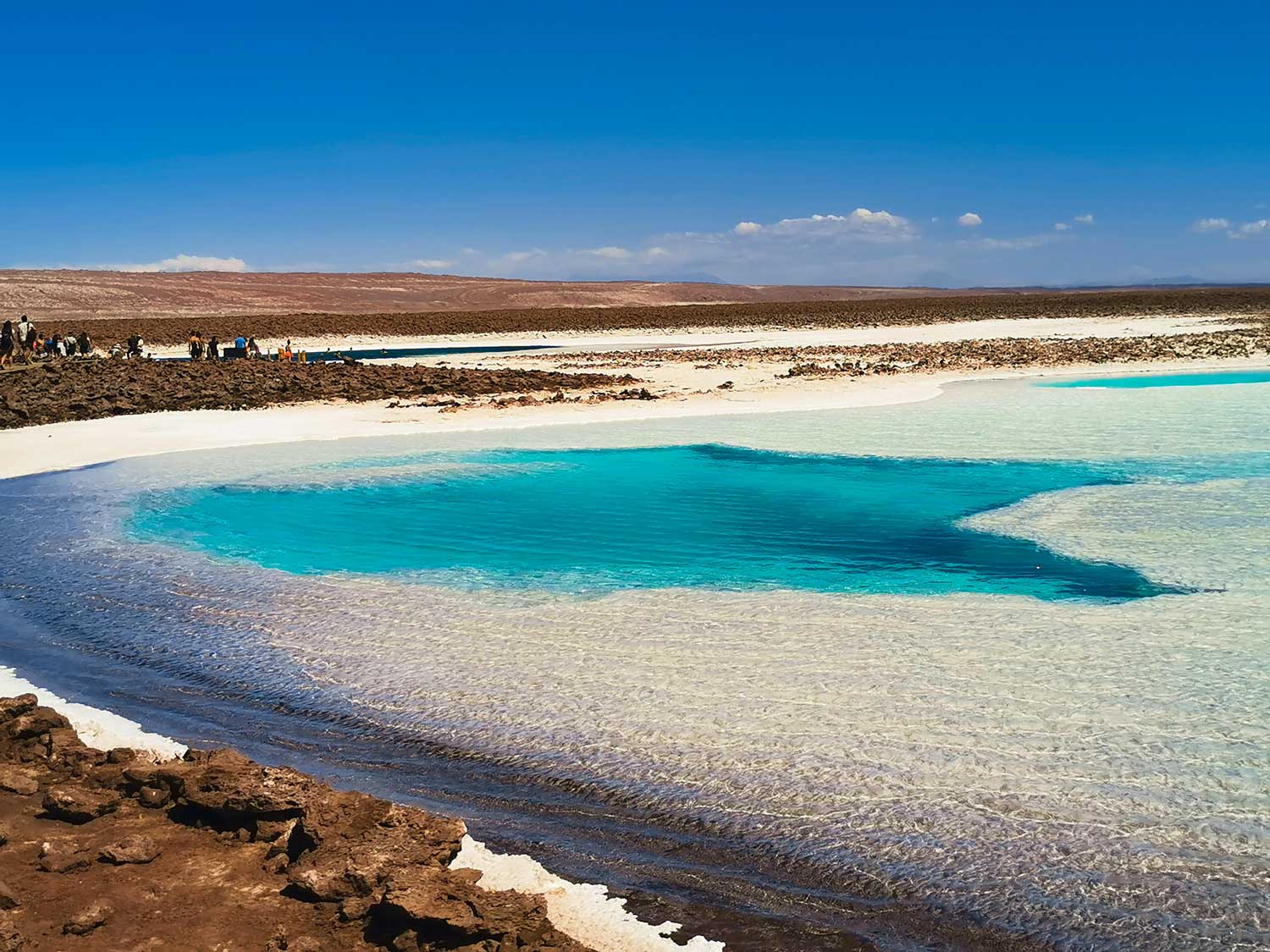
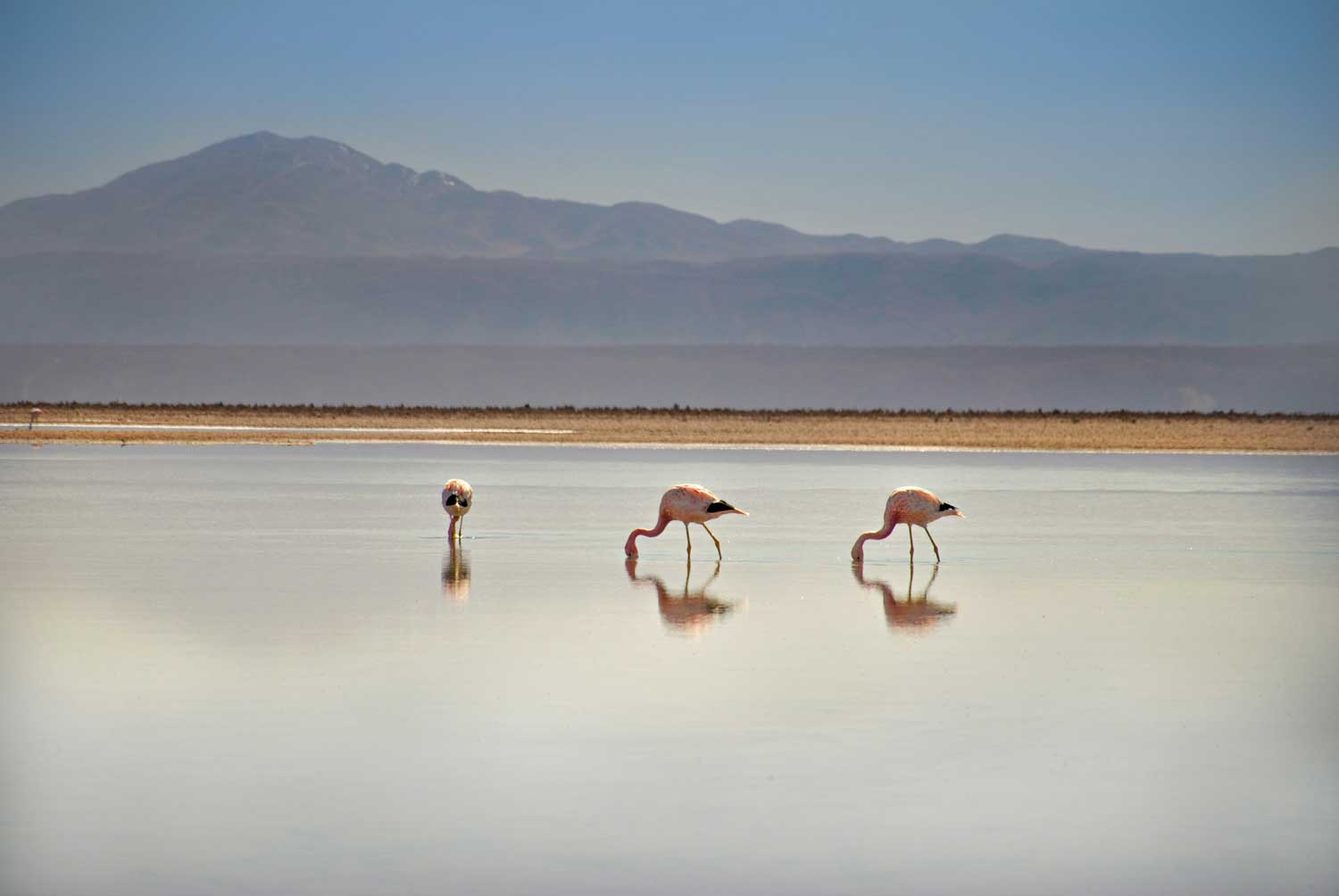
Days in the Atacama are best shaped by altitude, heat and light rather than a checklist. Mornings can begin early at El Tatio, when steam rises against cold air and volcanic ridges. Later, the desert opens into salt lagoons, flamingo habitat and mineral colour that changes with the sun. Valle de la Luna and the surrounding viewpoints reward slower timing—especially when the light softens toward evening.
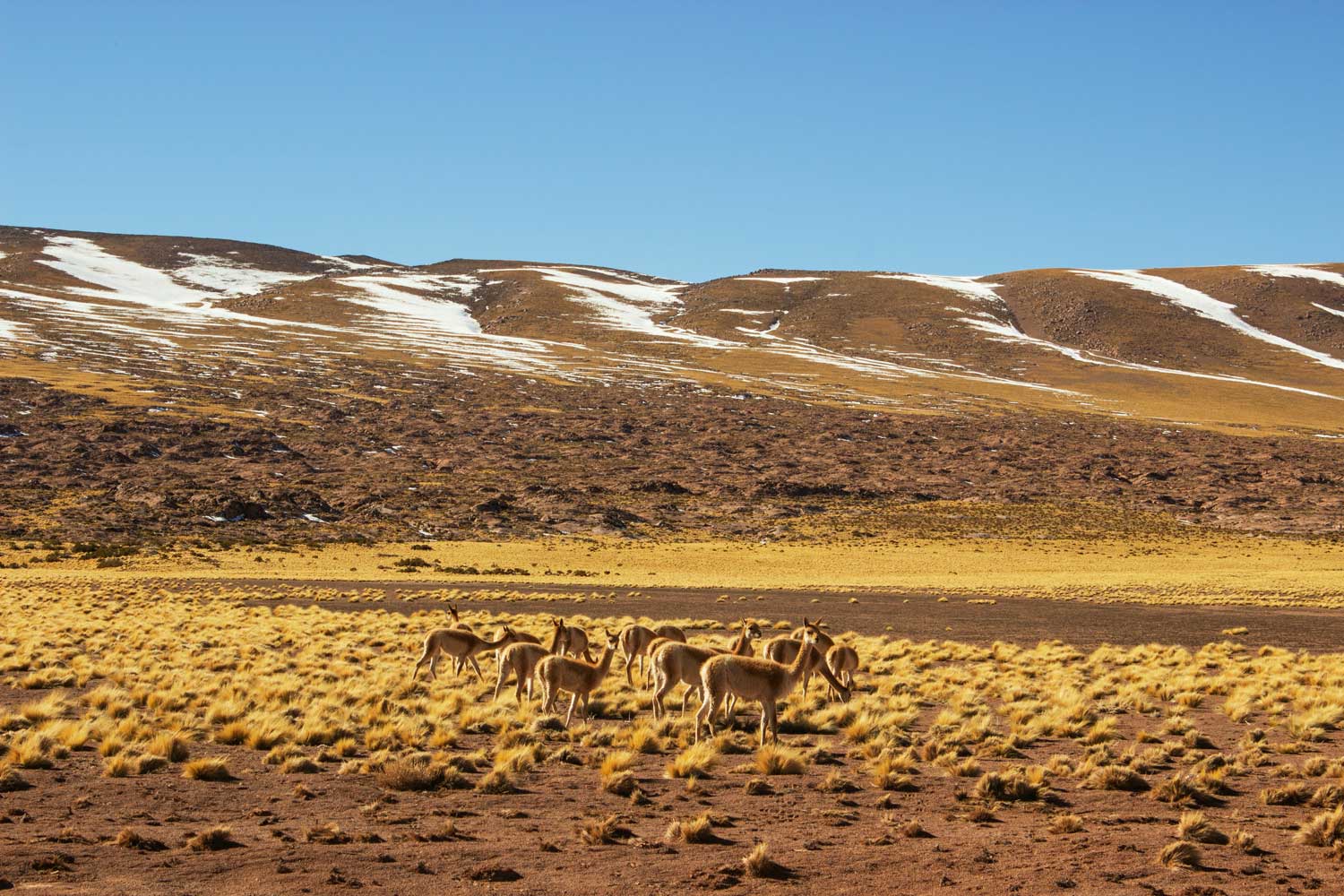
Between these landscapes sits a quieter kind of exploration: wildlife on the high desert edge, walks across salt crust and sand, and nights reserved for the sky. The strongest journeys here leave room for weather, transfer realism and the simple fact that the Atacama is most powerful when it is not rushed.
Hotels & Lodges
Stays shaped by the desert
In the Atacama, where you stay shapes how the desert is felt. Discreet desert lodges, design-led hotels near San Pedro, and quieter bases beyond the busiest strip can keep the journey close to landscape—terraces open to volcanic horizons, nights clear enough for astronomy, and mornings timed for altitude and light.
We look for places with a strong sense of place: architecture that respects the desert, service that stays calm, and locations that make Moon Valley, the lagoons and the high geyser fields feel reachable without turning every day into a transfer.