The night
A second geography
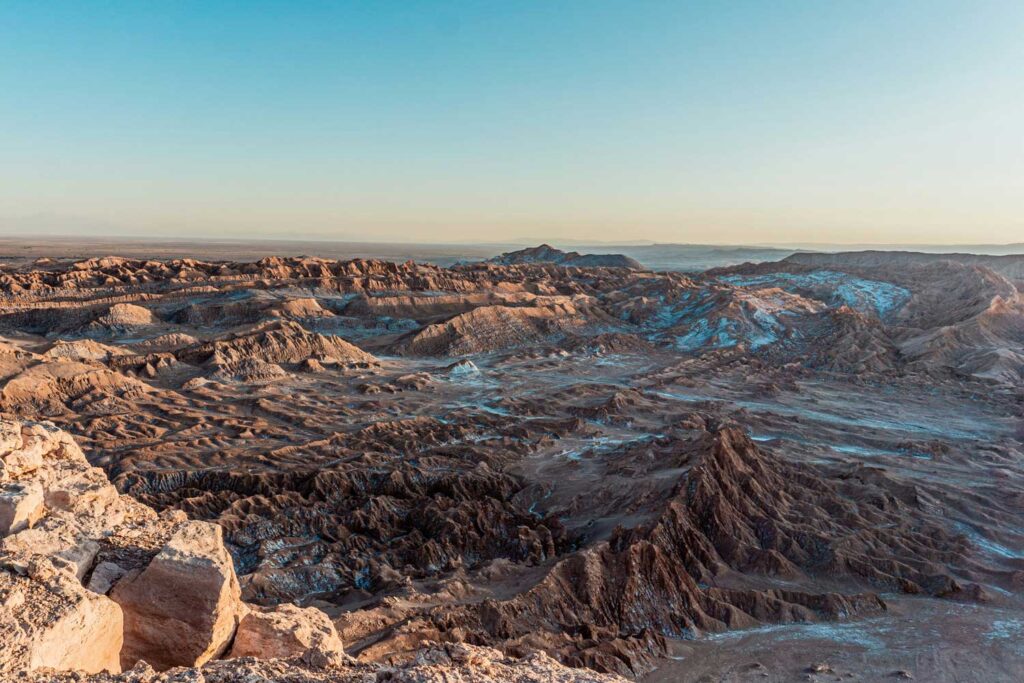
Sunset in the Atacama does not only end the day. Colour leaves the salt and the volcanoes. Distance becomes hard to judge. For a few minutes the desert can feel as if it has gone.
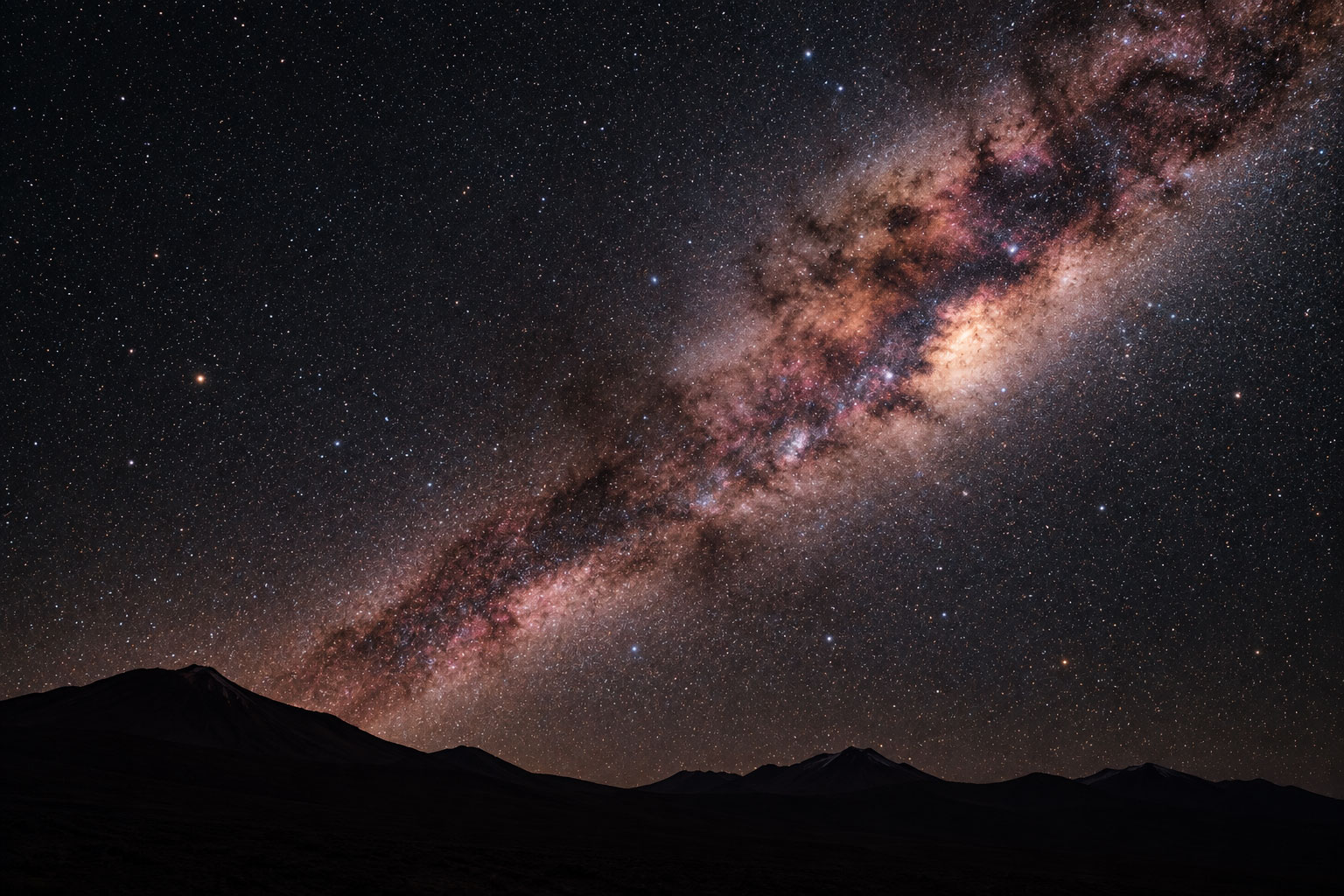
Then the eyes adjust. Points of light first, then fields of them, then a band with depth. What seemed empty resolves into structure: brighter star fields, quieter stretches, dust lanes cutting through the Milky Way.
The sky here is high, dry and often clear — the same reasons observatories sit in northern Chile. Tallies of “three hundred clear nights” vary by site. The useful fact for a traveller is simpler. After twenty or thirty minutes without a phone light, there is more sky here than most people have ever stood under.
A different map
You are not seeing more stars
If you come from Europe or North America, the shock is not only brightness. The map is different.
The Southern Cross is a compact marker. The Large and Small Magellanic Clouds show as faint, detached patches — satellite galaxies, visible to the naked eye on a dark night, and absent from most northern latitudes. In austral winter the centre of the Milky Way stands higher in the evening. Those dark lanes in the band are not voids. They are dust in our own galaxy, blocking more distant starlight.
None of this needs a degree. It needs a clear horizon, time for the eye to stop expecting the sky it already knows, and a night you chose on purpose.
Light
The Moon chooses which Atacama you get
Travel advice treats the Moon as a switch: new is good, full is bad. Here it is a choice of landscape.
New Moon: maximum darkness, the strongest Milky Way structure, the window most astrophotography wants.
A partial Moon: enough dark for star fields, enough light for ridgelines and salt. Often the more complete night if you want sky and desert together.
Full Moon: faint objects fade. The desert comes back: volcanoes and salt under a cold, continuous light. Still worth choosing, if that is the night you want.
Check the phase, and moonrise. Weather still cancels nights. San Pedro sits at about 2,400 m (7,900 ft); the first evening is colder than the day suggested.
How to look
Eye, glass, or a long exposure
Naked eye first. Dark-adapted, it will take the Southern Cross, the Magellanic Clouds, bright planets in season, and the structure of the band. The point is not a catalogue. It is how much the unaided eye recovers once the phone is dark.
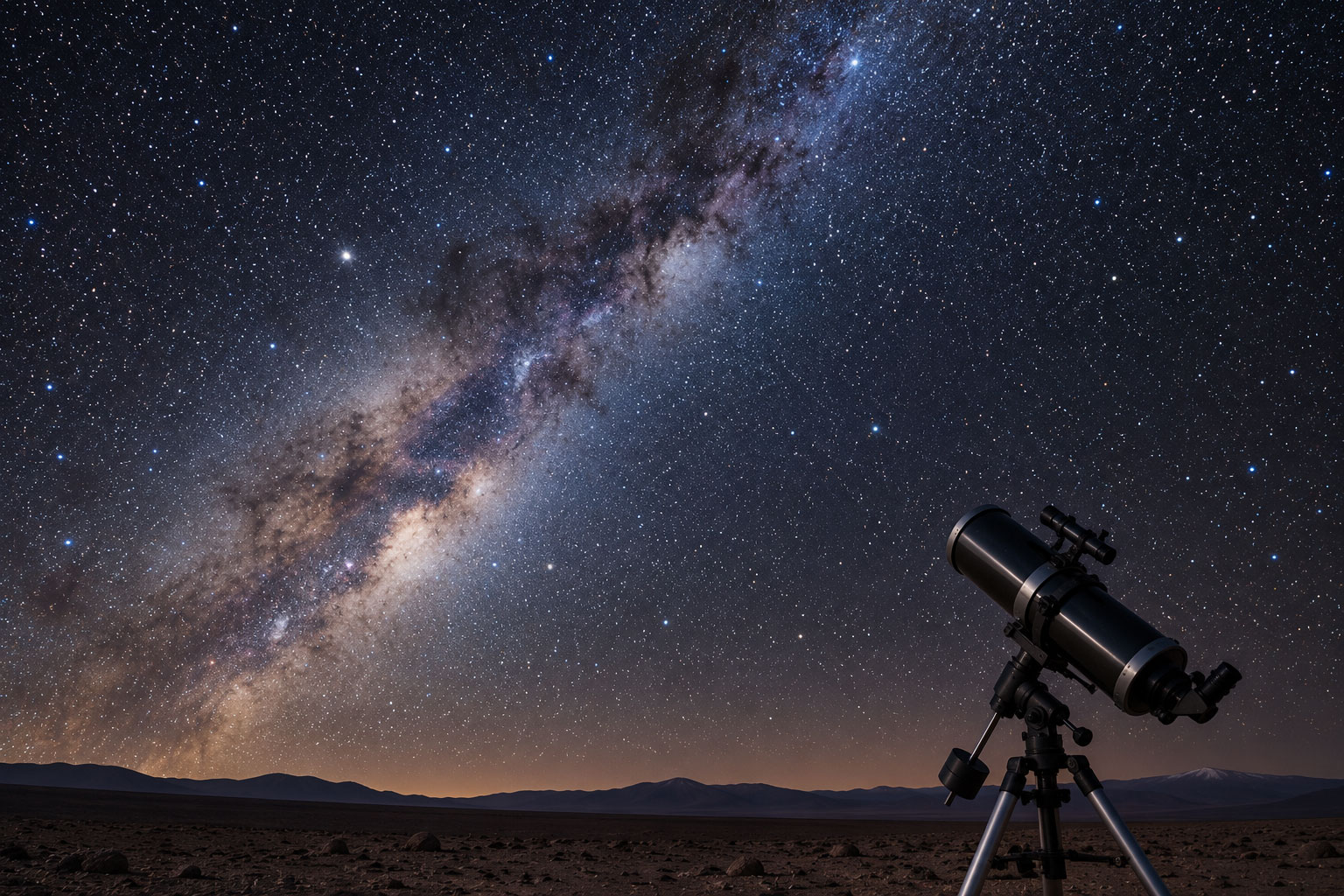
Binoculars add depth without ceremony. A telescope turns the night into selected visits — planets, clusters, a nebula — and replaces open-field immersion with guided attention. A camera gathers more colour than the eye sees in a glance. It is a different instrument, not a more honest one.
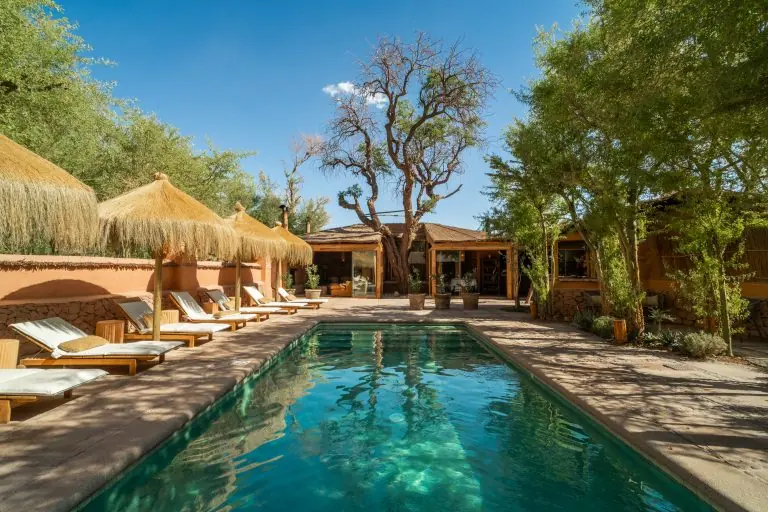
A good tour adds orientation and what is actually up that night. Going out on your own works if you leave the lights of San Pedro and give the eye half an hour. Some lodges run private sessions; confirm what they include rather than assuming a telescope on the terrace is a night of astronomy.
ALMA, on the Chajnantor Plateau, and ESO’s Paranal — about 2,635 m (8,645 ft) — exist because of this air. They are workplaces. ALMA’s public visit programme is suspended. Do not plan a tourist night around the array.
Planning
How to choose the night
The galactic centre is highest in the evening from late southern autumn through winter into spring — often peaking in austral winter. The Magellanic Clouds stay available under dark skies across a wider calendar. Exact hours shift; check a current sky chart rather than treating a month as fixed.